Industry playbooks
Beauty Influencer Marketing in Vietnam: A Category Playbook for 2026
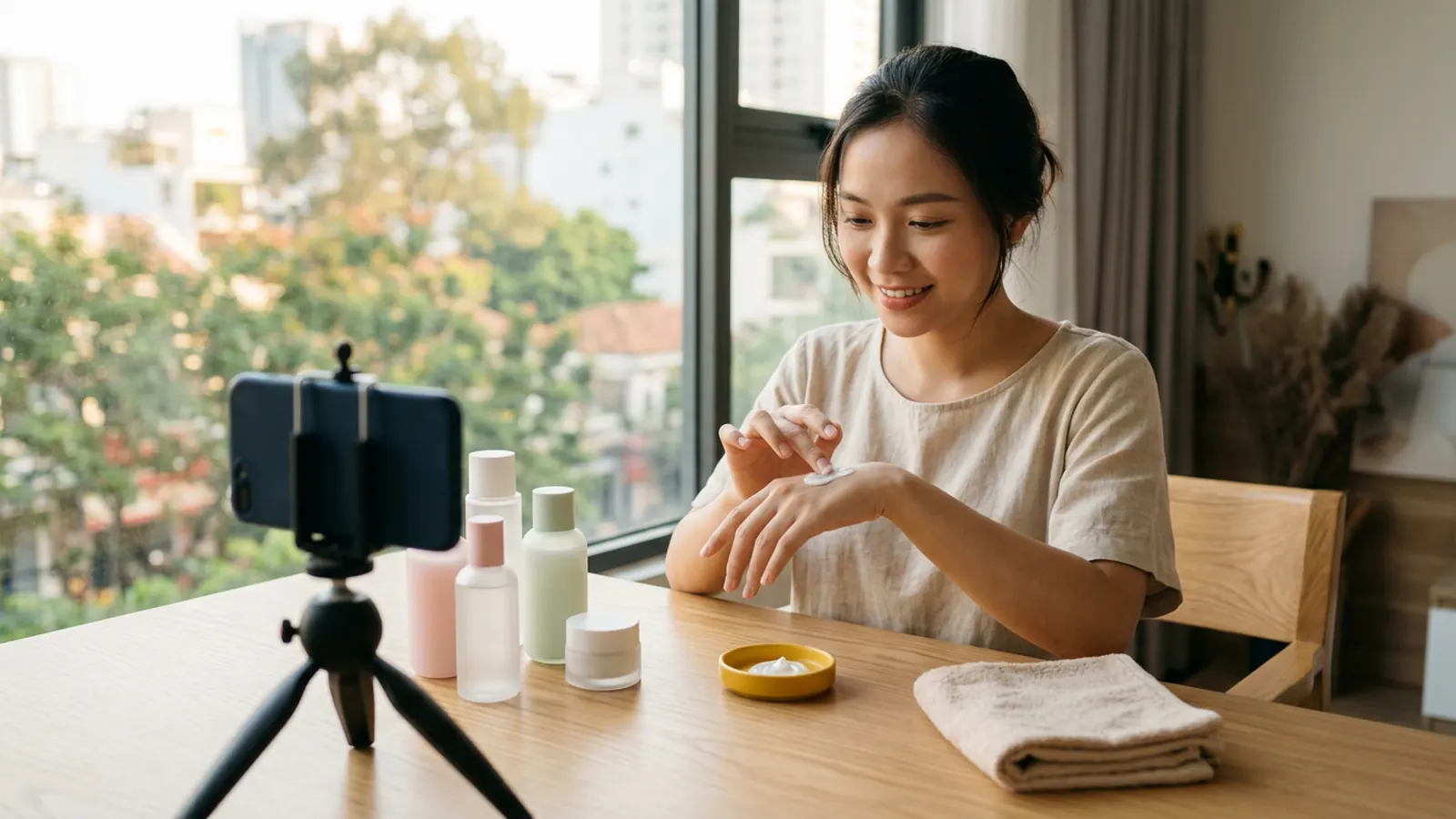
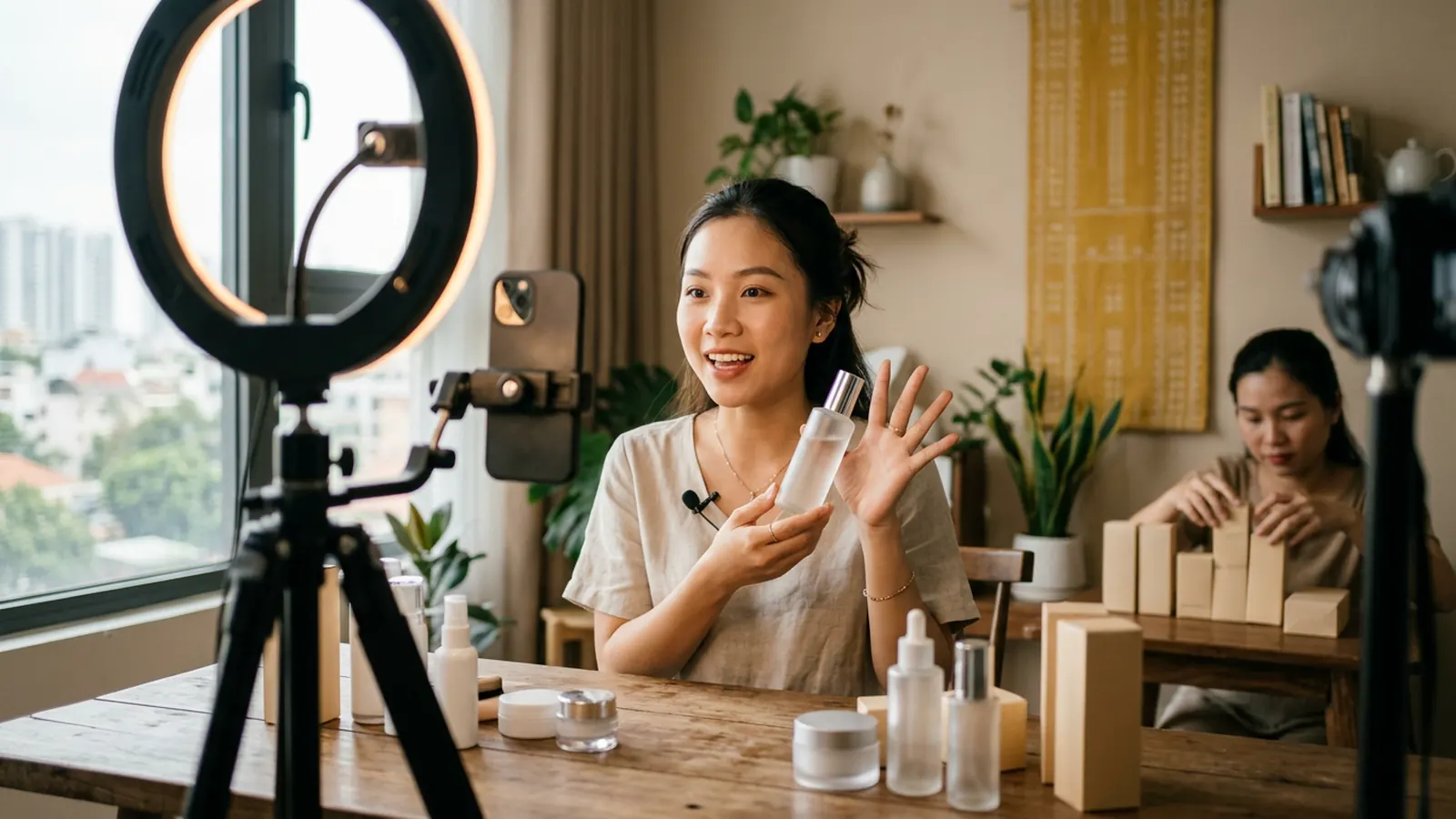
In beauty influencer marketing in Vietnam, creator content and shopping sit closer together than in most categories: shoppers discover skincare and makeup on TikTok, check reviews, then buy through TikTok Shop, Shopee or a livestream. That makes beauty a high-reward category, and also one with clear rules on what cosmetic content can say. This playbook covers the creator types, platforms, claim and disclosure rules, sampling, live formats and measurement we use for beauty brands.
Short answer
How does beauty influencer marketing work in Vietnam?
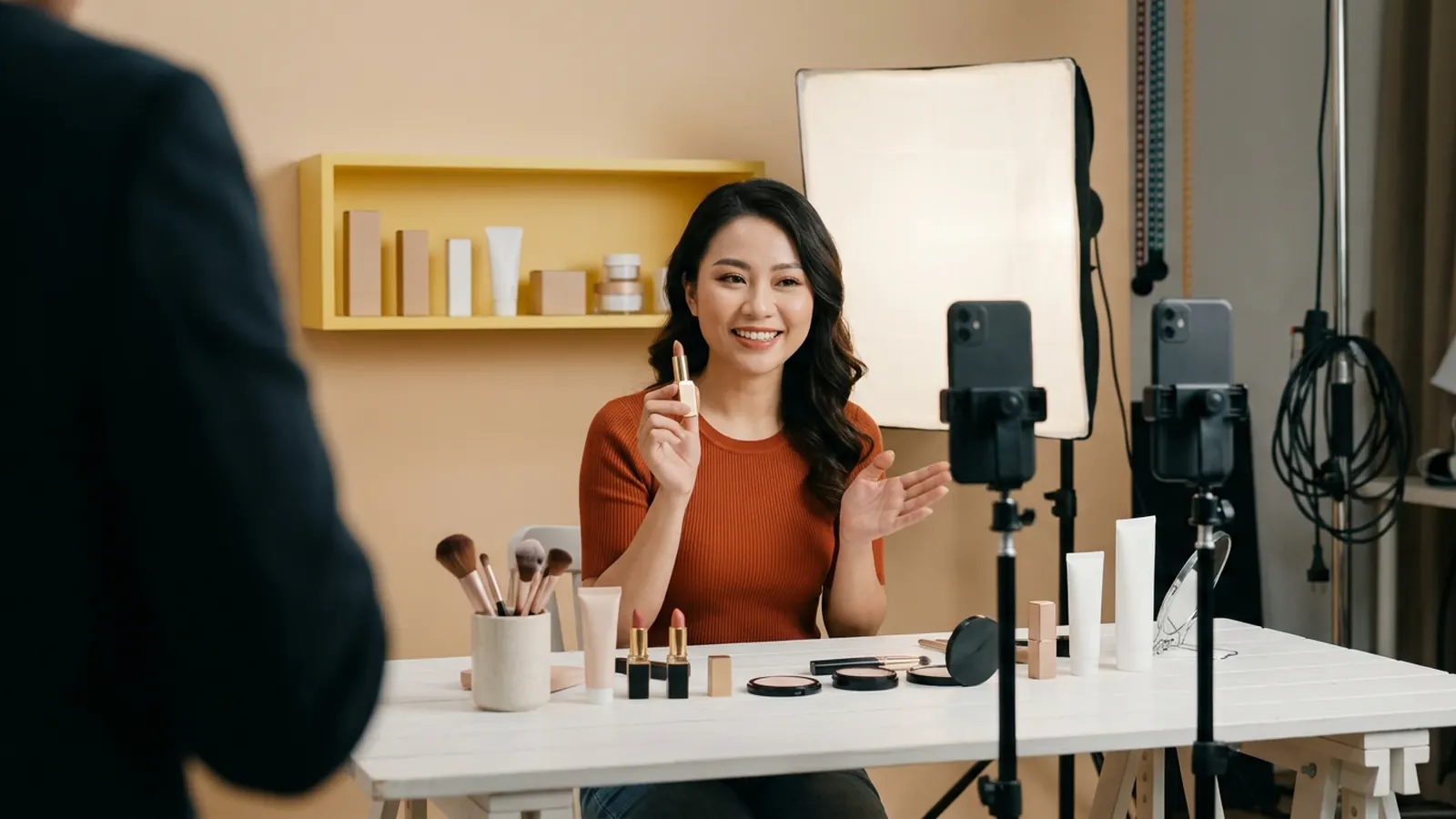
Beauty brands in Vietnam combine KOC reviews for search and trust, a smaller number of KOLs for reach, and affiliate and livestream creators who sell on TikTok Shop and Shopee. Every product needs its cosmetic notification before it is advertised, claims must match what was notified, sponsored posts must be labeled, and medical imagery is off limits.
- Mix skin-type reviewers, makeup artists, routine creators and live hosts
- TikTok and TikTok Shop for discovery and sales, Shopee for search and live
- Cosmetics ads need the product notification under the Advertising Law
- No doctor, pharmacist or clinic imagery in cosmetic ads (Decree 342/2025)
- Label sponsored content before and during the post
- Measure by product and creator type, not just by views
1. What beauty influencer marketing in Vietnam looks like today
Beauty influencer marketing in Vietnam runs on short video and social commerce. A shopper sees a texture close-up or a makeup tutorial on TikTok, checks a few more reviews, compares prices, and buys through a shop link, an affiliate video or a livestream. The creator is often the store window as well as the advertisement.
That changes how a beauty brand should plan. Instead of one hero campaign, you need a layer of KOC reviews that makes the brand searchable, a few larger creators for reach at launch, and an always-on group of affiliate creators and live hosts who keep selling. The sections below take each layer in turn.
KOC marketing guideInfluencer marketing in Vietnam: the full guide
2. Which platforms matter for beauty in Vietnam?
In our campaigns, TikTok is the main discovery channel for beauty, and TikTok Shop turns that discovery into orders through product-tagged videos and lives. Shopee is where many shoppers search and compare, and its affiliate and live features matter for conversion. Facebook still carries community reviews and groups, Instagram suits visual makeup and premium brands, and YouTube holds longer, more considered reviews.
- TikTok and TikTok Shop: discovery, affiliate videos, livestream sales
- Shopee: search, comparison, Shopee Live and affiliate
- Facebook: groups, community reviews, often older audiences
- Instagram: visual makeup, premium positioning
- YouTube: long-form reviews and tutorials
TikTok Shop Vietnam guideTikTok Shop affiliate for KOCsLocal store creator campaignsPet product influencer marketing
3. Beauty creator types and what each is good for
Beauty creators are not interchangeable. Pick by the job you need done, then by audience fit, then by price.
- Skin-type reviewers: show their own skin, texture and routine; strongest for skincare trust and search
- Makeup artists and tutorial creators: show application and shade range; strongest for makeup
- Ingredient explainers: build understanding for actives-led products; keep claims within what is notified
- Routine and lifestyle creators: place the product in daily life; good for reach and new users
- Affiliate KOCs and live hosts: built to convert on TikTok Shop and Shopee
- Celebrities and large KOLs: launch reach and brand image, used sparingly
4. Why doctor-style creators and medical imagery are risky
Be careful with creators who present as doctors, pharmacists or clinic staff when they promote a cosmetic. Decree 342/2025/ND-CP, which details the Advertising Law from 15 February 2026, says cosmetic advertising must not use the images, uniforms, names, letters or articles of medical facilities, doctors, pharmacists or other health workers. It also says a cosmetic ad must not mislead people into thinking the product is a medicine.
In practice that rules out white coats, clinic settings, 'as a doctor I recommend' framing and similar cues in cosmetic ads. A creator with a medical background can still talk about routines in their own content, but a paid cosmetic post should not lean on medical authority. Clinics and aesthetic services follow separate rules again, so treat them as their own project.
5. Cosmetic advertising rules in 2026: what beauty content must respect
Three rules shape beauty creator content in Vietnam. First, the amended Advertising Law (Law 75/2025/QH15, in force 1 January 2026) says advertising cosmetics requires the product's cosmetic notification. Second, Decree 342/2025/ND-CP lists the mandatory information in cosmetic ad content (product name, features and uses, the name and address of the organization that notified the product, and warnings required by international agreements) and requires ad content to match the nature, classification and declared functions of the product. Third, the general rule in Article 19 that ad content must be truthful and not mislead about features, quality or uses.
One process changed this year: Circular 03/2026/TT-BYT repealed the Ministry of Health's circular on confirming advertising content from 15 February 2026, and health departments have stopped issuing cosmetic ad content confirmations. That removes a pre-approval step; it does not relax what the content may say. The brand still owns the compliance of every creator post.
- Hold the notification receipt number before any paid content goes live
- Build the approved claim list from the notification, not from marketing copy
- Decide with counsel where mandatory information goes in creator posts
- Keep supporting documents for any test result or percentage claim
6. Disclosure rules for beauty creators
Paid or obligated beauty posts must be labeled. Article 15a of the amended Advertising Law requires influencers conveying ads to verify the advertiser, check the product documents, not introduce products they have not used or do not understand, and announce the advertisement immediately before and during it. Article 23 requires social media users who advertise to mark ads or sponsored content.
For beauty this has a practical upside: the 'must have used it' duty means you should plan enough product time for every creator before their deadline, which also produces better content. Send the product documents, including the notification receipt number, with the sample.
7. Sampling for beauty creators: sizes, shades and timing
Send what lets the creator judge the product honestly. For skincare that usually means a full-size unit or enough product for the routine period you are asking them to test; for makeup it means the right shades for their skin tone, not the shade you most want to sell.
Example: say a foundation launch with eight shades asks each creator for a selfie in daylight before shipping and sends the two closest shades. Fewer mismatched swatches, fewer awkward videos, and the brand learns which shades creators reach for.
- Confirm skin type and concerns before choosing skincare SKUs
- Match shades from a daylight photo before shipping makeup
- Allow enough use time before the posting deadline
- Include a Vietnamese insert with usage steps and approved claims
- Track each unit to a creator so you can follow up
Product seeding campaign playbookK-beauty KOC seeding in Vietnam
8. Briefing beauty content that converts and stays honest
A good beauty brief asks for proof the viewer can see: texture, finish, wear over time, how it layers, how it looks in natural light. It also sets limits that protect trust, because beauty audiences in Vietnam are quick to call out edited results.
- Show texture and finish close up, in natural light where possible
- No beauty filters or skin-smoothing effects on any result being claimed
- No staged before-and-after; if showing change over time, show real days
- Use the approved claim list and the do-not-say list
- Mention skin type so viewers can judge relevance
- Disclosure wording and placement
9. Livestream formats that work for beauty
Beauty is well suited to live selling because the product can be shown on skin in real time. The common formats are a brand-run live with a host, a KOC live on the creator's own account, and a co-hosted session where a creator joins the brand's live.
Pick formats that show the product rather than only discount it: a full-face makeup tutorial, a shade-matching session that takes viewer questions, a routine walkthrough by skin type, or a launch live with a limited bundle. Keep the same claim rules as video; live is still advertising.
Livestream selling in VietnamFMCG and household KOC playbook
10. Budgeting a beauty creator program
Split the budget by job rather than by creator size: a seeding and review layer, a launch reach layer, an affiliate and live layer, and paid amplification of the best content. The split changes with the stage of the brand. A new brand leans on seeding and reviews; an established one shifts toward affiliate, live and paid amplification.
Creator fees depend on deliverables, exclusivity in the beauty category, usage rights, the platform and the timing (mega-sale periods are busier). Agree affiliate commission separately from any fixed fee.
What drives KOC booking costHow to plan a creator campaign budget
11. Measuring beauty influencer marketing
Measure by product and by creator type. Reviews from skin-type creators may drive saves and search rather than immediate sales; affiliate and live creators should be judged on orders and returns; launch KOLs on reach and brand search. Mixing them into one cost-per-view number hides what each layer is doing.
- Views, saves and comments that ask product questions
- Brand and product search on TikTok and Shopee before and after
- Affiliate orders, GMV and returns by creator and SKU
- Live performance: viewers, orders and average order value per session
- Content reused in ads and how it performed
Measuring influencer marketing ROICreator campaign reporting
12. A beauty campaign calendar: launch, always-on and mega sales
A beauty brand's year usually has three rhythms. A launch phase, where seeding and reviews come first and reach follows. An always-on phase, where a steady group of affiliate KOCs and live hosts keeps sales moving. And mega-sale peaks such as the double-day sales and the run-up to Tet, where creators are booked earlier and lives and affiliate offers are concentrated.
Book creators for sale peaks well ahead, agree offers with the platform plan, and keep a reserve of approved content you can push as ads when a live or video takes off.
Creator marketing for Korean brands in VietnamF&B influencer marketing in VietnamFashion influencer marketing in Vietnam
FAQ
Frequently asked questions
Do cosmetics ads in Vietnam still need approval from the Department of Health?
The ad content confirmation procedure for cosmetics was abolished from 15 February 2026, when Circular 03/2026/TT-BYT took effect. Cosmetics advertising still requires the product notification under the Advertising Law, and content must follow Decree 342/2025/ND-CP.
Can a doctor or dermatologist promote a cosmetic in Vietnam?
Cosmetic ads must not use the images, uniforms, names or writings of doctors, pharmacists, other health workers or medical facilities, under Decree 342/2025/ND-CP. A creator with medical training should not use that authority, clothing or setting in a paid cosmetic post.
Which platform is best for beauty influencer marketing in Vietnam?
Most beauty brands need TikTok for discovery and TikTok Shop or Shopee for sales, with Facebook, Instagram and YouTube in supporting roles. The right mix depends on the product, price point and where your shop is live.
Do beauty creators have to label sponsored posts?
Yes, for paid or obligated content. Under Law 75/2025/QH15, influencers must announce the advertisement immediately before and during it, and social media users must mark advertising or sponsored content.
How long should beauty creators test a product before posting?
Long enough to give an honest view of what they are talking about. Makeup can be judged quickly; skincare claims about how skin feels over time need a longer use period. The law also says influencers must not introduce products they have not used.