Livestream Commerce
Live Commerce in Vietnam: Models, Costs and How Brands Run It
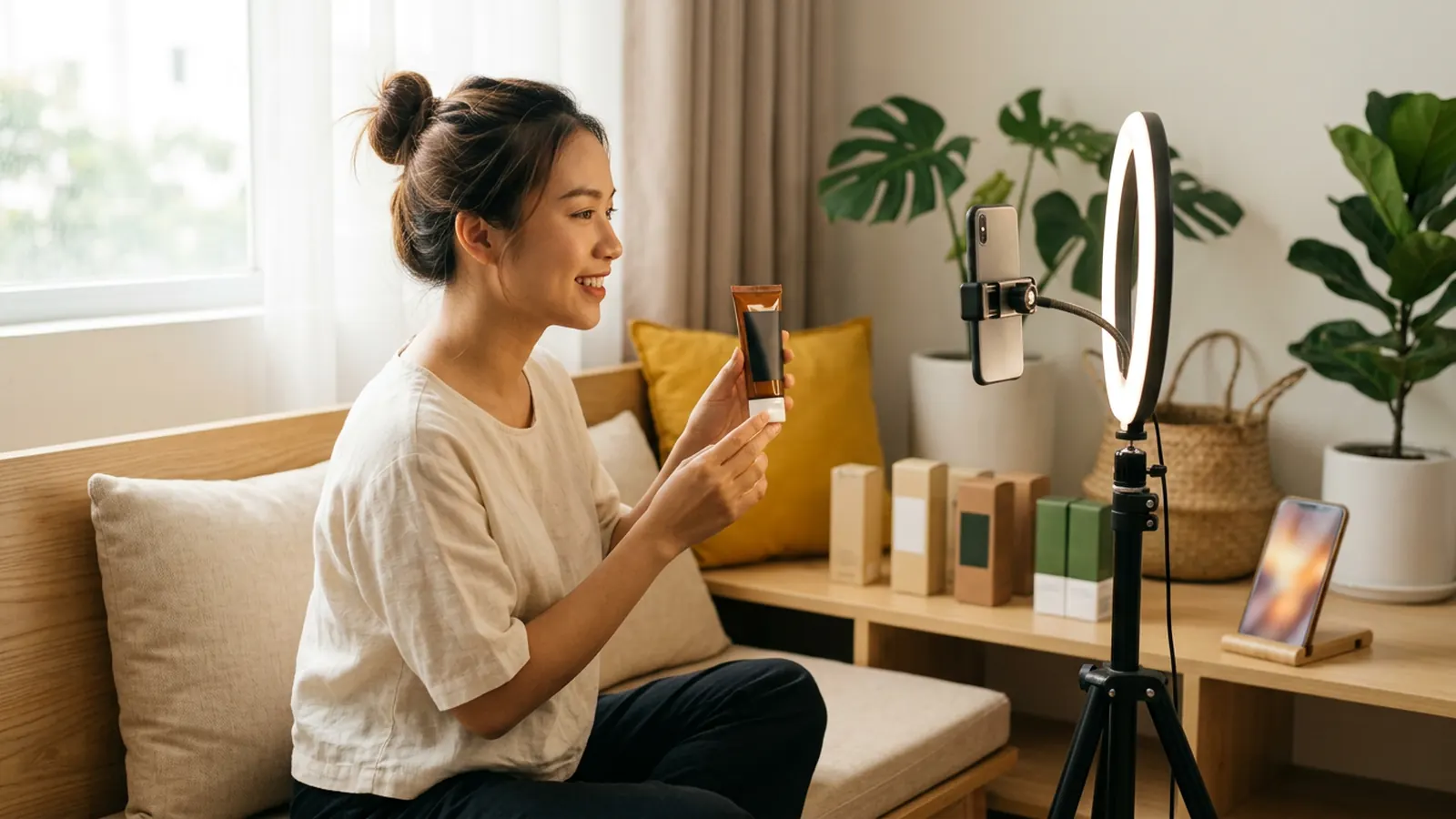
Live commerce in Vietnam means selling through a live broadcast where viewers can order inside the same platform, mostly on TikTok Shop, Shopee Live and Facebook. Brands run it in three ways: their own channel and host, a booked KOC or KOL host, or a large collab session with a top creator. Since 1 July 2026 it also sits under the E-commerce Law, so the paperwork you hand a host matters as much as the script.
Short answer
Quick answer: how do brands run live commerce in Vietnam?
Pick one of three models: a brand-owned live on your own shop, a booked KOC or KOL who hosts on their channel or yours, or a mega/collab session. Each needs a host, a script, reserved stock, vouchers and an ops person off camera. Under the 2026 E-commerce Law, hosts must pass identity verification and must not give false product information.
- Brand-owned live: you control the schedule, script and shop
- Booked KOC/KOL host: borrowed audience and selling skill
- Mega or collab live: reach and urgency, highest coordination load
- Hand the host product quality and business-condition documents before going live
- Judge results on net orders after cancellations and returns, not on peak viewers
1. What is live commerce in Vietnam, and where does it happen?
Live commerce in Vietnam is a live video session where a host presents products and viewers order without leaving the platform. Vietnam's E-commerce Law (Law 122/2025/QH15, in force from 1 July 2026) now defines livestream sales in almost exactly those terms: a live, online broadcast on an e-commerce platform that advertises or introduces goods and lets viewers order through that platform's online ordering function.
In practice, most brand sessions run on three surfaces. TikTok LIVE linked to a TikTok Shop is where creator-led selling is strongest. Shopee Live sits inside the marketplace, so the audience is already in shopping mode. Facebook Live is still used by sellers with an established page or group community, often with orders confirmed through Messenger or Zalo rather than an in-app checkout, which affects how you track results.
2. The three live commerce models brands use
Almost every brand livestream in Vietnam fits one of three models, and most brands end up running two of them side by side. The difference is who hosts, whose channel the session runs on, and how much control you keep over the script and the offer.
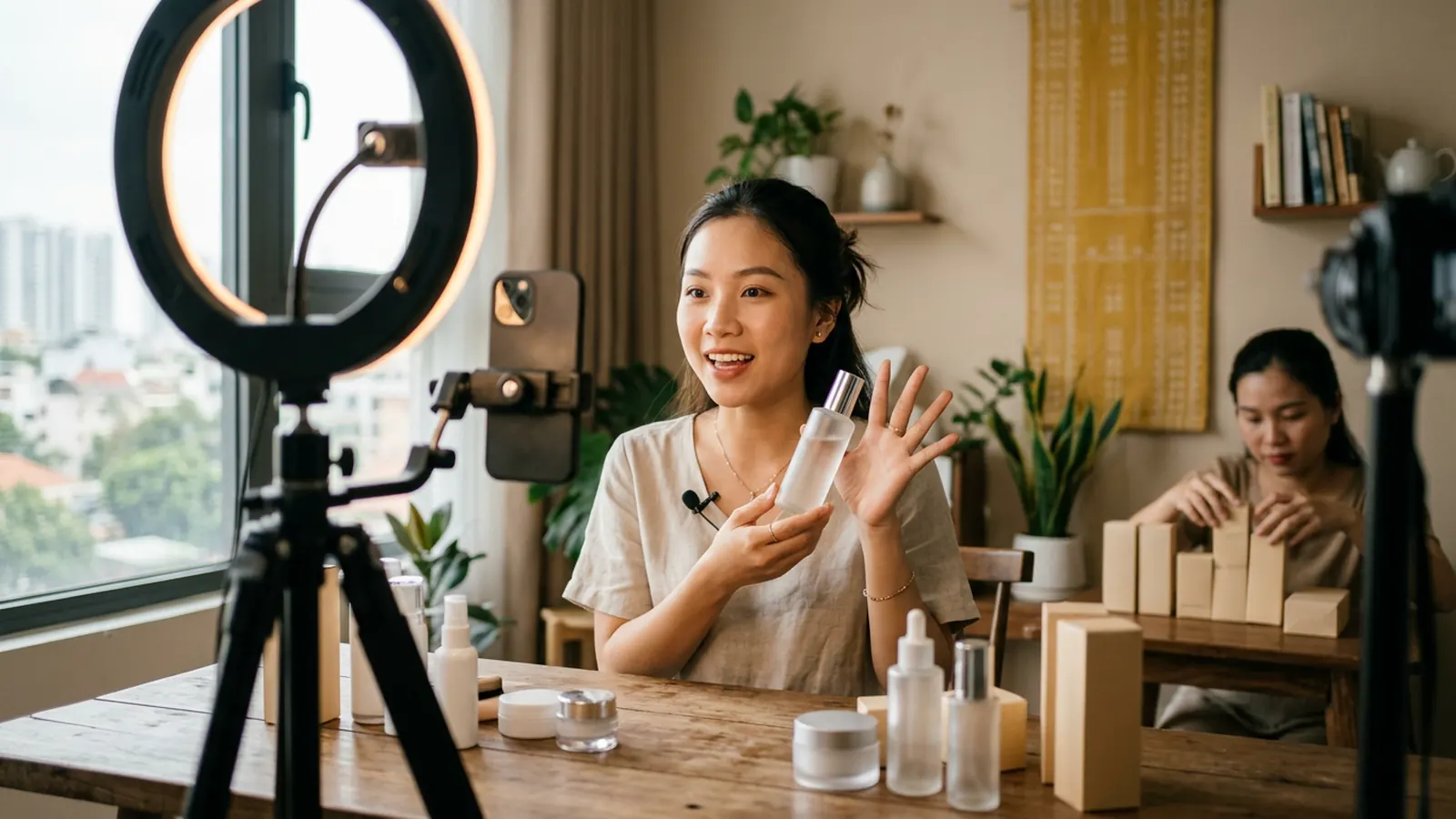
- Model 1, brand-owned live: your shop, your host (staff or contracted), your schedule
- Model 2, booked KOC/KOL host: a creator sells on their channel or appears on yours
- Model 3, mega or collab live: a top creator or multi-brand session built around a big offer
3. Model 1: running a brand-owned live
A brand-owned live is the cheapest model to repeat and the slowest to grow. You control the timing, the product order and the price, but the first sessions often reach few viewers because the shop has no live audience yet.
- A host who knows the product deeply (often a trained staff member)
- A product order planned around one hero item and two or three add-ons
- A comment moderator who answers questions and pins key information
4. Model 2: booking a KOC or KOL host
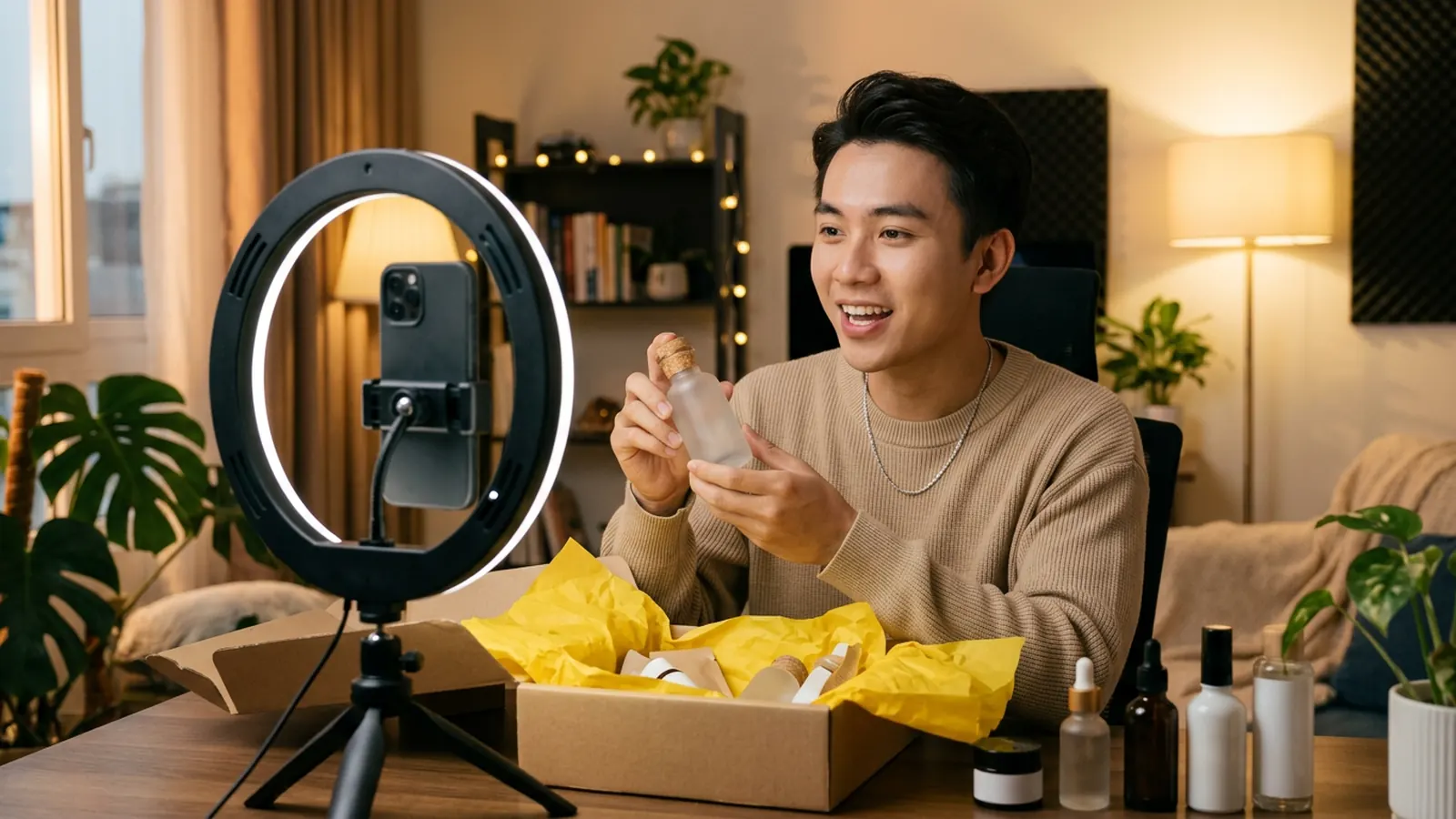
Booking a KOC or KOL host means paying for a creator's audience and selling skill for one or more sessions. It suits launches, new categories and brands whose own shop has not built a live audience yet.
There are two set-ups. The creator can sell your products in a session on their own channel, usually alongside a commission, or they can appear as a guest host on your channel. Their channel brings the bigger audience. Your channel keeps followers and data with your shop. Agree which one you are buying before you discuss price, because the deliverables and the reporting differ.
Example: a skincare brand books three KOCs for one evening session each in the same week, each on their own channel, and adds one guest appearance on the brand channel at the weekend to pull new followers back to the shop.
- Check past live sessions, not just short videos: pace, product knowledge, comment handling
- Confirm the platform, date, slot length and which products appear
- Agree fixed fee, commission or both, and how commission is verified
- Put content rules, claim limits and disclosure in the contract
How to find the right KOC before you bookKOL/KOC contract checklistBooking a livestream host
5. Model 3: mega and collab livestreams
Mega or collab lives are long, high-energy sessions led by a top creator, often with several brands and a headline offer. They can produce a large spike in orders, but they need the most negotiation, stock and preparation of any model.
Slots in these sessions are limited, so brands usually compete on the offer: deeper discounts, gift bundles or exclusive sets. Before you commit, run the numbers on margin after discount, commission, any slot fee and expected returns. A sold-out session can still lose money if the offer was set without that check.
6. What the 2026 E-commerce Law asks of livestream sellers and hosts
Since 1 July 2026, livestream selling in Vietnam is governed by the E-commerce Law (Law 122/2025/QH15, Articles 22 to 24) and Decree 248/2026/ND-CP, which details it. The core rules: platforms must verify the host's identity before a sale can go live, sellers must give hosts proof that products are legal and meet quality rules, and hosts must not give false or misleading information.
Under Article 22, the platform carries out electronic identity verification of the person who hosts the sale (foreign hosts are verified through valid legal documents), keeps the audio and video of livestream sales accessible for at least one year, and must stop a stream or remove content that breaks the law or offends social ethics in language, image, costume or behaviour. Decree 248/2026 adds that each platform with a livestream feature must publish livestream rules covering, among other things, the parties' rights and obligations, how hosts verify their identity, and when streams are stopped.
Article 24 lists what the host must do: provide information for identity verification, follow the platform's published livestream rules, refuse to work with a seller who does not provide the required documents, avoid false or misleading information about uses, origin, quality, price, promotions or warranty, and stick to approved advertising content where the law requires ad content to be confirmed in advance. The Ministry of Industry and Trade's July 2026 briefing on the law confirms that KOLs, KOCs and other individuals hired to promote products are covered.
Separately, the amended Advertising Law (Law 75/2025/QH15, Article 15a, in force since 1 January 2026) requires influencers who carry advertising to verify the advertiser, check product documents, not promote products they have not used or do not understand, and announce that the content is advertising immediately before and during it. Treat both laws as part of the brief, and have your legal adviser confirm how they apply to your category.
Vietnam's influencer advertising law, explained for brandsVietnam e-commerce law for livestream and affiliate
7. The pre-live document pack: what to hand your host
Article 23 of the E-commerce Law puts the burden on the seller: before the session, you must give the host the documents that prove the products can be sold. A host who does not receive them is expected to refuse, so a missing file can cancel a booked slot.
- Proof that business investment conditions are met, if the product is in a conditional business line
- Proof that the product meets quality requirements under product quality law
- The advertising content confirmation, where the category requires one, and the approved claims from it
- For cosmetics: the product notification details (the amended Advertising Law requires a cosmetics notification to advertise)
- Price, promotion mechanics, warranty and return policy, written exactly as they will be said on air
- A list of claims the host must not make
8. What drives the cost of a live commerce session
There is no standard price for a livestream in Vietnam, and any quoted range goes out of date quickly. What you can control is the set of factors that move the cost, so you can compare quotes on the same basis.
- Host type and reach: staff host, KOC, KOL or top creator
- Fee structure: fixed fee, commission on sales, or a fixed fee plus commission
- Session length, number of sessions and exclusivity in your category
- Channel: the creator's channel or a guest appearance on yours
- Offer cost: discounts, vouchers, gifts and bundles funded by the brand
- Production: studio or set, lighting, sound, a second camera, props
- Off-camera team: moderator, shop admin, ops lead, plus samples for the host
- Usage rights if you want to reuse clips of the session in ads
9. How to plan a livestream run of show
A run of show is the minute-by-minute plan for the session. It keeps the host, the moderator and the shop admin moving together, which matters most when a voucher drops or a product sells out.
- Opening: who the host is, what is on offer today, the ad disclosure
- Hero product block: demo, approved claims, price and voucher
- Add-on blocks: bundles or complementary products
- Engagement moments: questions, polls or giveaways that follow platform and promotion rules
- Repeat cycles for new viewers joining mid-session
- Close: last call, how to order, after-sales and returns
10. Stock, vouchers and the team behind the camera
Name an ops lead who owns the shop back end during the session. That person checks that prices, vouchers and stock match the run of show, and decides on the spot whether to extend an offer or stop it.
- Reserve stock per product and set an alert level
- Test vouchers and price changes before going live
- Prepare pinned comments with price, voucher and how to order
- Keep a reply sheet for common questions (delivery, ingredients, size, returns)
11. Which KPIs should you track for live commerce?
Track live commerce on two levels: what happened in the room and what happened to the money. Peak concurrent viewers and comment volume tell you whether the content held attention. Orders, gross sales and especially net sales after cancellations and returns tell you whether the session paid back.
Write down the data source and the time you pulled the numbers. Platform dashboards update after the session, and returns arrive days later, so a report built the next morning is a first read, not the final one.
- Attention: viewers, peak concurrent viewers, average watch time, comments
- Intent: product clicks, add-to-cart, voucher claims
- Commerce: orders, gross sales, cancellations, returns, net sales
- Cost: host fee, commission, offer cost, production and staff time
Influencer marketing ROI: measuring beyond viewsLivestream KPIs
12. Which model should you start with?
Start with the model that matches your shop's current audience and your team's capacity, not with the biggest session you can afford.
Example: a new brand with an empty shop books KOC hosts on their channels for the first month to learn which products and offers sell live, then opens a weekly brand-owned slot using the best-performing script. Example: an established brand with daily shop traffic runs brand-owned lives several times a week and adds one collab session per quarter around a big promotion date.
- No live audience yet: start with booked KOC hosts
- Steady shop traffic and a trained host: build a brand-owned schedule
FAQ
Frequently asked questions
Is livestream selling legal in Vietnam?
Yes. Livestream sales are a recognised activity under the E-commerce Law (Law 122/2025/QH15), in force since 1 July 2026, together with Decree 248/2026/ND-CP. Platforms must verify the host's identity, sellers must give hosts proof that products meet legal and quality requirements, and hosts must not give false or misleading information.
Do livestream hosts in Vietnam need identity verification?
Yes. Article 22 of the E-commerce Law requires the platform to verify the host's identity electronically before allowing a livestream sale, and foreign hosts are verified through valid legal documents. Each platform publishes its own procedure in its livestream rules, as Decree 248/2026 requires.
How much does it cost to book a KOC for a livestream?
There is no fixed rate. Cost depends on the host's reach and selling record, fixed fee versus commission, session length, exclusivity, whose channel is used, and the offer you fund. Ask every host to quote on the same scope so you can compare like for like.
Should a brand sell on its own channel or the creator's channel?
Use the creator's channel when you need reach quickly, and your own channel when you want followers and customer data to stay with your shop. Many brands start on creators' channels, then bring the best host in as a guest on the brand channel.