Law and compliance
Vietnam's 2025 E-commerce Law: New Rules for Livestream Selling and Affiliates
Vietnam's Law on E-commerce No. 122/2025/QH15 and Government Decree No. 248/2026/ND-CP took effect on 1 July 2026, and they reach directly into livestream selling and affiliate marketing. The Ministry of Industry and Trade (MOIT) described the key points at a dissemination conference on 3 July 2026. This guide sticks to what MOIT published, translates it into a checklist for brands and agencies, and flags what you should confirm with a lawyer. It does not cite individual article numbers, because we only verified the MOIT summary and not the full text.
Short answer
What do the new e-commerce rules say about livestream and affiliate?
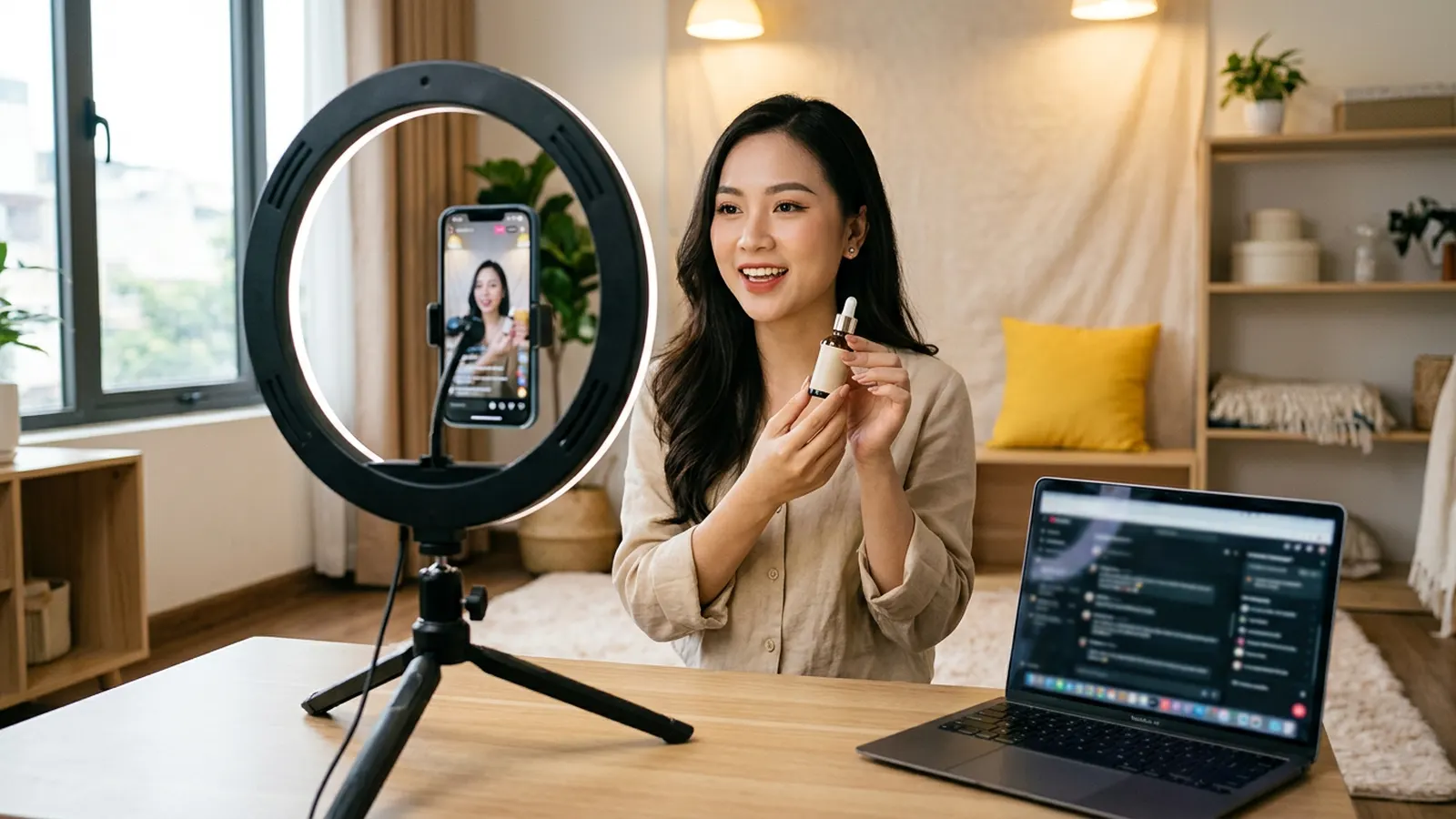
According to the Ministry of Industry and Trade, individuals who livestream sales, including KOLs, KOCs, influencers and people engaged to promote products, must complete identity verification before broadcasting. Product presentations must be truthful about function, quality, origin, price, warranty and availability. In affiliate marketing, all parties must be transparent about their roles, affiliate links, referral codes and responsibilities.
- Law 122/2025/QH15 and Decree 248/2026/ND-CP both took effect on 1 July 2026
- Platforms must verify seller identity, and social platforms with commerce features must separate social activity from selling
- Livestream sellers, KOLs, KOCs and hired promoters verify identity before going live
- Claims about function, quality, origin, price, warranty and stock must be truthful
- Affiliate parties must be transparent about roles, links, referral codes and responsibilities
- Advertising-law disclosure rules still apply on top
1. Which rules are we talking about?
Two texts matter. The Law on E-commerce No. 122/2025/QH15, and Government Decree No. 248/2026/ND-CP dated 30 June 2026, which details a number of articles of the law. MOIT states that both took effect on 1 July 2026.
MOIT's Vietnam E-commerce and Digital Economy Agency (iDEA) presented them at a conference on 3 July 2026. The goal it describes is compliance before selling, and a stronger basis to act against counterfeit goods, products of unknown origin, misleading advertising and consumer rights violations.
2. Identity verification for sellers and platforms
Under the new rules, operators of intermediary e-commerce platforms must verify sellers' identities before allowing them to do business. MOIT presents this as a way to reduce anonymous accounts and to support traceability, tax administration and consumer protection.
For social media platforms that integrate e-commerce functions, operators must verify sellers' identities and distinguish ordinary social interaction from commercial activity. For brands this means a shop or account used to sell must be set up with real, verifiable details.
3. What it means for livestream hosts, KOLs and KOCs
MOIT states that individuals conducting livestream sales, including KOLs, KOCs, influencers or individuals engaged to promote products, must complete identity verification before broadcasting sales sessions. The practical point is simple: a host who has not verified cannot be your plan for a live date.
Build verification into your booking timeline. Ask the host early whether their account is verified for selling on the platform you plan to use, and do not confirm a live slot until it is.
4. Truthful product presentation
According to MOIT, presentations must be truthful and must not mislead consumers regarding product functions, quality, origin, pricing, warranty policies or product availability. That list is a useful template for your brief.
Give hosts a claim sheet that contains only statements you can support, the real price and voucher terms, the warranty or return policy, and the real stock position. Ask them to stay inside it when they speak live.
5. Affiliate marketing: transparency between all parties
For affiliate marketing, MOIT says all participating parties must ensure transparency regarding their roles, affiliate links, referral codes and their respective responsibilities when promoting goods and services.
In practice, put the roles in writing: who is the seller, who is the platform, who is the creator or affiliate partner, which link or code belongs to whom, and who answers consumer complaints. This also supports clean commission reconciliation later.
6. How this sits next to the advertising law
The e-commerce rules do not replace advertising rules. As described in our influencer advertising guide, Article 15a of the Advertising Law, as amended by Law 75/2025/QH15 and effective 1 January 2026, requires influencers to announce an advertisement and to check the advertiser and the product documents.
Treat the two as layers. E-commerce rules govern who may sell, how they are identified and what they tell buyers. Advertising rules govern how promotion is labelled and what a creator checks before posting.
7. Consumer rights and selling outside the platform
MOIT highlights consumers' rights to information, to lodge complaints, to personal data protection and to protection in disputes. Consumers should receive clear information on sellers, products, prices, origin, return and warranty policies and complaint handling.
It also warns that transactions outside the platform ecosystem can leave buyers without platform protection, verification, refunds and dispute resolution. Tell hosts not to move buyers to private chats or off-platform payment during a live.
8. A pre-live checklist for brands
Our suggested checklist turns the MOIT summary into actions. It is a working tool, not legal advice.
- Host identity verified for selling on the chosen platform
- Seller account and shop details are accurate and verifiable
- Claim sheet approved, with function, quality, origin, price, warranty and stock statements
- Affiliate roles, links and referral codes recorded in the booking
- Return, warranty and complaint contact prepared for the live
- Advertising disclosure wording agreed with the host
- Instruction not to move buyers off-platform
9. What we could not verify
We rely on MOIT's published summary of the conference. We did not read the full text of the law or the decree for this guide, so we do not cite article numbers, penalty levels or special rules for foreign hosts or regulated product categories.
If your campaign involves a foreign host, a regulated product category such as cosmetics claims or supplements, or large affiliate payments, ask a Vietnamese lawyer to check the full text.
10. Next steps for your team
Review your livestream booking template and brief for the verification, claims and affiliate transparency points above. Then plan live dates with enough lead time for the host to be verified.
If you are building a livestream programme from scratch, start from the operating guide and add the checklist to your run of show.
FAQ
Frequently asked questions
When did Vietnam's new e-commerce law take effect?
The Ministry of Industry and Trade states that the Law on E-commerce and Decree 248/2026/ND-CP both took effect on 1 July 2026.
Do KOCs and KOLs need identity verification before livestream selling?
According to MOIT, individuals conducting livestream sales, including KOLs, KOCs, influencers and individuals engaged to promote products, must complete identity verification before broadcasting sales sessions.
What must a host be truthful about during a live?
MOIT lists product functions, quality, origin, pricing, warranty policies and product availability. Presentations must not mislead consumers on any of them.
What changes for affiliate programmes?
All parties must be transparent about their roles, affiliate links, referral codes and their responsibilities when promoting goods and services.
Does this replace the advertising disclosure rules?
No. Advertising rules such as Article 15a of the Advertising Law still apply to how promotion is labelled, so brands should follow both sets of rules.