Industry Playbooks
Fashion Influencer Marketing in Vietnam: Try-Ons, Sizing and Return Rates
Fashion influencer marketing in Vietnam has a problem that beauty and food do not: clothes have to fit. A creator who looks great in a dress can still send you a wave of returns if viewers cannot judge the size. This guide shows how fashion brands choose creators by body type and style, which try-on formats work, how to handle samples and returns, and why net revenue after returns is the number to watch. It describes operating practice, not market statistics, and no figures here are invented.
Short answer
How should fashion brands use influencers in Vietnam?
Match creators to the body types and styles of your customers, ask for try-on videos that show fit, size and fabric honestly, publish a size guide the creator can reference, and measure net revenue after returns rather than gross orders. Treat samples as inventory with a return plan, not as gifts.
- Choose creators whose body type and style resemble your customers
- Ask for try-on, outfit and honest fit videos with size stated on camera
- Give every creator the same size chart and fabric notes
- Track samples and decide in advance what happens to them afterward
- Compare gross orders with returns and exchanges to see net revenue
- Disclose paid or gifted content in every post
1. Why is fashion influencer marketing in Vietnam different from other categories?
Fashion influencer marketing in Vietnam is different because the product has to fit a body, so a good video can still produce a bad order if the viewer picks the wrong size. Beauty and food buyers judge taste or skin response later; fashion buyers judge fit the moment the parcel opens.
That makes honesty about size, fabric and styling the real conversion tool. Brands that ask creators to look flawless often get high clicks and high returns. Brands that ask them to show fit clearly usually get fewer surprises.
2. How do you match creators to your customers' bodies and style?
Start from your size range and your best-selling customer profile, then look for creators whose body type, height and style are close to them. Viewers compare themselves with the creator, so a creator who is far from your core customer misleads even when honest.
Use several creators with different builds instead of one aspirational face. A rack of videos where a size S, a size L and a taller creator each wear the same piece answers more questions than one polished lookbook.
3. Which try-on formats work best?
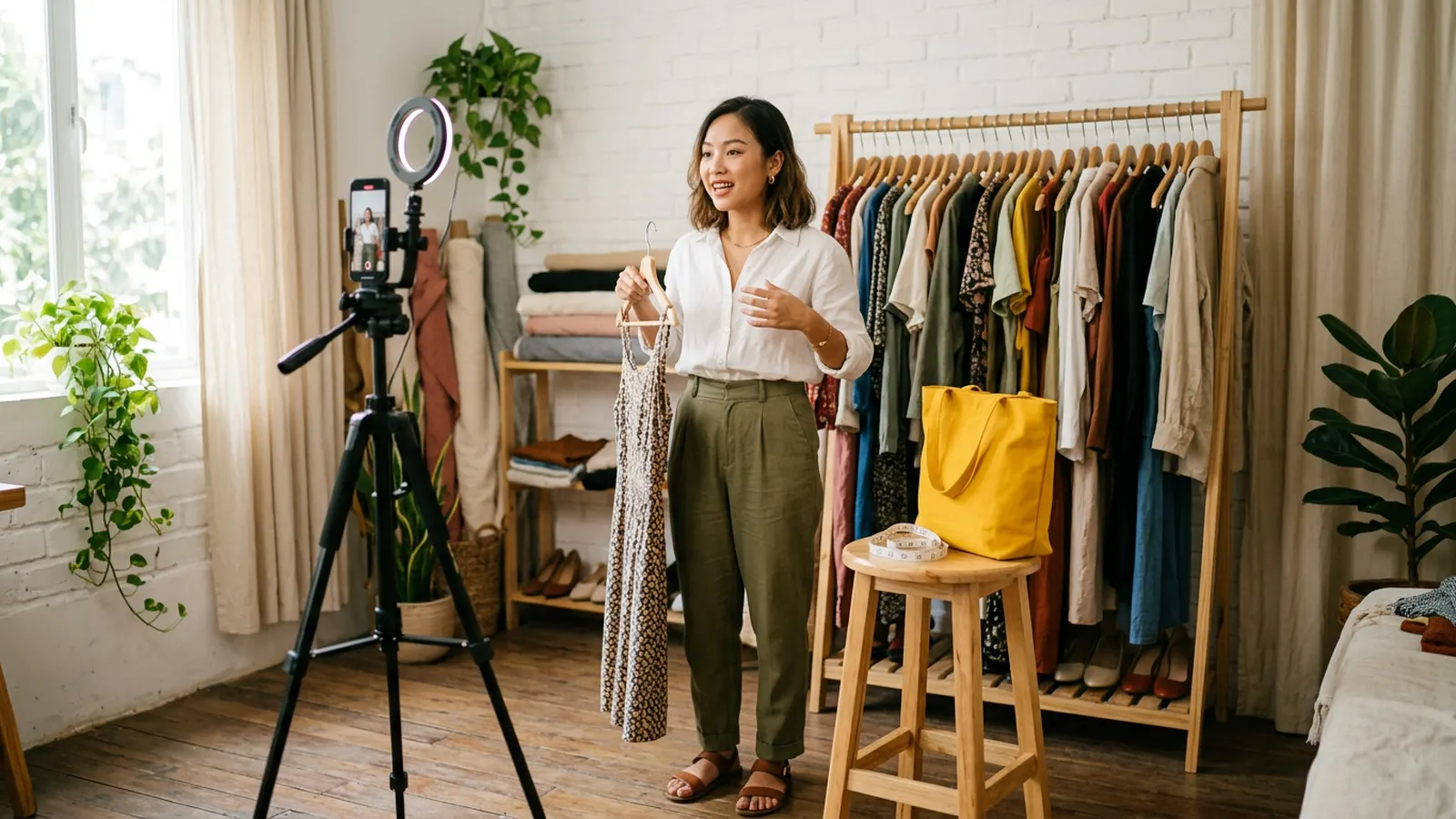
The formats that sell fashion are the ones that show fit in motion. They are simple, repeatable and easy to brief.
Pick two or three formats and give each creator the same checklist so you can compare results later.
- Single-item try-on: one piece, turned and moved, size and height stated
- Haul try-on: several pieces from your range with honest ranking
- Outfit of the day: pieces combined with the creator's own items
- Size comparison: two creators in the same garment
- Fabric close-up: texture, thickness and what happens after washing, if the creator has tested it
4. What should a fashion creator brief include?
A fashion brief must contain more product data than a typical brief, because the creator needs facts to be accurate. Include the size chart, the fabric composition as printed on the label, care instructions, colors and any known fit notes such as runs small or relaxed cut.
Ask the creator to state their height and the size they wore at the start of the video. Agree on the disclosure line and the posting window, and on what the creator will do if a garment does not suit them.
5. How should you handle samples?
Samples are inventory with a purpose. Decide before sending whether the creator keeps the piece, returns it or buys it at a discount, and write it in the agreement. Unclear terms are the most common cause of friction between brands and fashion creators.
Log each sample by creator, size, color, ship date and expected post date. Ship the exact SKU that is live on the product page so viewers who click land on what they saw.
6. Why do returns decide whether a fashion campaign worked?
A campaign with strong orders and heavy returns can lose money after shipping, handling and unsellable stock. Marketplaces and TikTok Shop have their own return and refund rules, which can change, so read the current policy of each channel before you plan margins.
Return reasons are also content feedback. If many returns say too small, a video may have made the garment look looser than it is, or the size chart may be off. Feed those reasons back into the next brief.
7. Why measure net revenue instead of gross orders?
Net revenue is gross sales minus returns, refunds and exchanges, and it shows what a creator actually contributed. Gross orders reward creators who generate impulse clicks; net revenue rewards creators whose viewers keep the product.
Build a simple table by creator: orders, returned orders, net orders, commission paid and net revenue after returns. When commission is paid on gross orders, check how your channel treats commission when an order is returned, since rules differ and should be confirmed in your seller documents.
8. How many creators and which tiers suit a fashion launch?
Fashion usually benefits from breadth: many mid-size and micro creators of different builds, with a smaller number of larger creators for awareness. Start with a test group so you can compare fit feedback and returns by creator.
Our guide on creator numbers explains how to size a campaign from your goal and budget.
9. What does disclosure require?
Vietnam's Advertising Law, as amended by Law 75/2025/QH15 and in force from 1 January 2026, adds Article 15a. It requires influencers to announce that content is advertising immediately before or during it and to check the advertiser and the product documents.
In fashion this covers gifted pieces as well as paid posts. Put the disclosure wording in the brief and check that it is visible in the final video, not only in the caption.
10. What does a 30-day fashion creator plan look like?
Use the first month to learn which creators send buyers who keep the product.
- Week 1: set the goal, publish the size chart, shortlist 15 creators of varied builds
- Week 2: send briefs and sample SKUs, log each sample
- Week 3: collect videos, check size statements, reply to fit questions in comments
- Week 4: compare net revenue by creator, review return reasons, keep the strongest performers
FAQ
Frequently asked questions
How do I stop fashion returns after influencer campaigns?
You cannot remove returns, but you can reduce them with an accurate size chart, creators who state height and size, and videos that show fit honestly. Track return reasons by creator.
Should fashion samples be returned by the creator?
That is a business decision. Many brands let creators keep pieces; others ask for returns of higher-value items. Write the rule in the agreement before shipping.
Are KOCs better than KOLs for fashion?
KOCs of different builds often show fit more convincingly, while larger creators add awareness. A mix usually works best, and the test results should guide the ratio.
What metric should I use for fashion creators?
Net revenue after returns by creator, alongside engagement quality. Gross orders alone can hide expensive returns.
Do I need to disclose gifted clothing?
Yes, treat gifted content as advertising and have the creator announce it under Article 15a of the amended Advertising Law.