Industry Playbooks
FMCG and Household Products: KOC Demos, Bundles and Long Livestreams
Household and fast-moving consumer goods are cheap, bought often and easy to compare. That changes how creator marketing should work. A single glamorous review rarely moves a sponge or a detergent; demonstrations, bundles and a steady live-selling rhythm do. This guide covers the economics, the content formats and the operational checks that matter before you brief a single KOC.
Short answer
How should FMCG and household brands use KOCs in Vietnam?
Lean on demonstration and volume. Use short demo videos that show the product working, price bundles so the affiliate commission still leaves you a margin, and pair them with long livestreams. Confirm stock, fulfilment and returns before launch, because low-ticket orders arrive in bursts and one stock-out wastes the whole campaign.
- Show the product working in the first seconds of the video
- Build bundles so the commission fits a small margin
- Use livestreams for repeat and multi-item baskets
- Check stock and packing capacity before the push
- Track orders per creator, not only views
1. Why is FMCG different from beauty or fashion?
A low-price item has little room for expensive creator fees. The economics depend on volume, repeat purchase and basket size, not on one high-value sale.
Shoppers also compare quickly. A creator who shows a clear result in a few seconds helps more than a long story about brand values.
2. Which video formats work for household products?
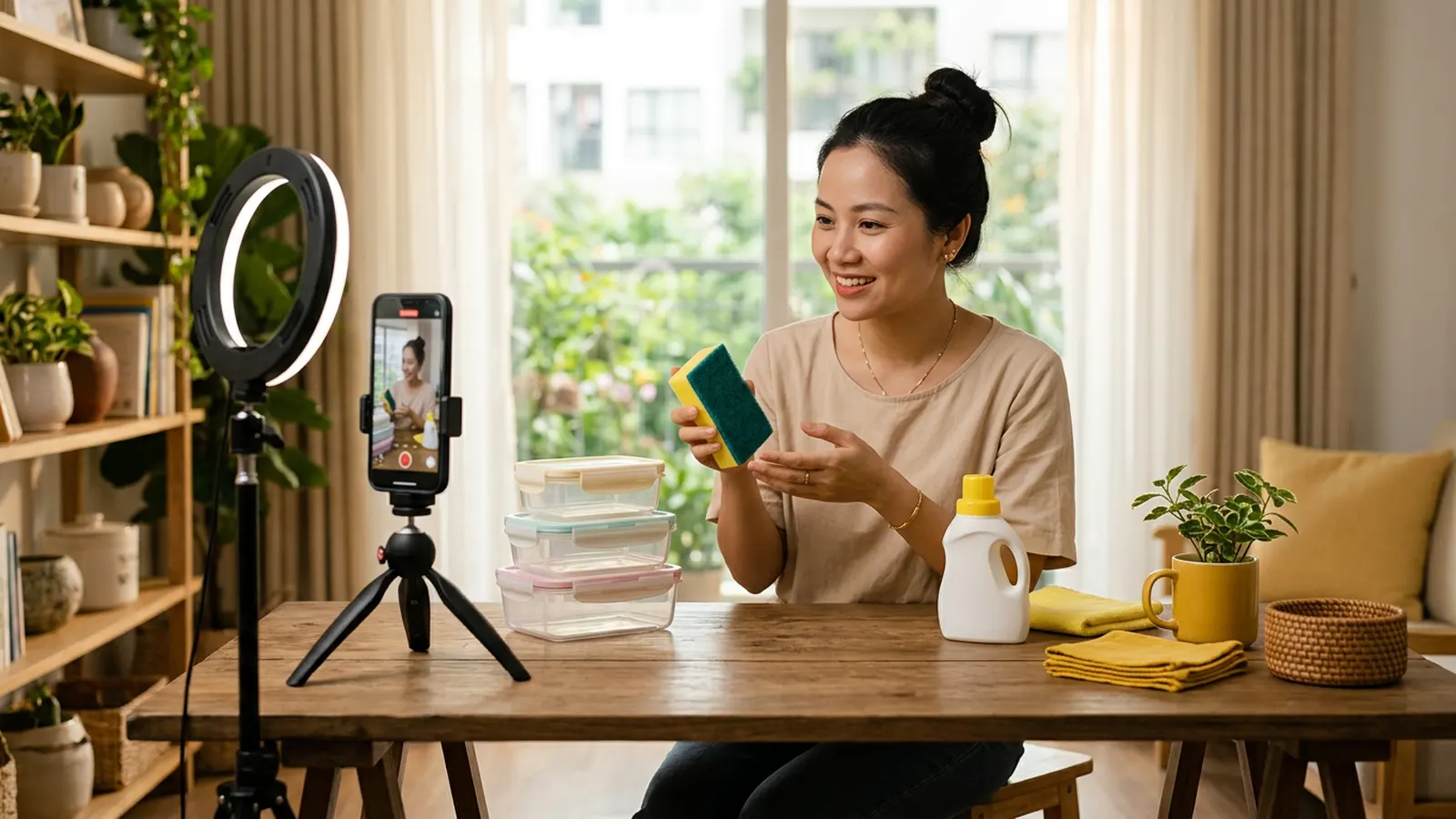
Demonstrations travel best: a stained pan before and after, a storage box fitted into a cupboard, a cleaner used on a real surface. The product should be doing the job on screen, not sitting beside the creator.
Short how-to or tip videos also fit, because the product is part of a useful routine rather than a sales pitch.
- Before and after demonstrations
- Tips and routines that use the product
- Unboxing of a bundle with a price shown
- Comparison against what the viewer uses now
3. How do you build bundles that pay for commission?
Single low-price items leave almost nothing after platform fees, shipping and commission. Bundles raise the basket value and give creators something easy to explain.
Work out the margin per bundle before you set the commission, and do not promise a rate you cannot sustain.
4. Why do long livestreams suit these products?
Repeat-purchase items sell well when viewers can see several products, ask questions and add multiple items at once. A long live session gives time to demonstrate each item and answer comments.
Plan a run-of-show with a rhythm of demonstrations, bundle reveals and limited offers so the session is not a single repeated pitch.
5. Which KOCs fit household and consumer goods?
Look for creators with a believable home or family setting: parents, home cooks, organisers and cleaning content makers. Their audience already watches routines and expects practical tips.
Check recent videos for real demonstrations and comments asking where to buy, not only likes.
6. What stock and fulfilment checks come before launch?
A creator push can produce a burst of small orders in hours. Confirm available stock, packing speed, courier handover times and how returns are handled.
A stock-out during a livestream wastes creator effort and can damage the shop rating, so agree a buffer and a clear message for when an item runs out.
- Stock count by item and bundle
- Daily packing capacity
- Courier pickup schedule
- Returns and damaged-item process
- A plan for sold-out items
7. How should you set vouchers and offers?
Vouchers push conversion on low-price items but eat margin quickly. Decide limits per creator and per period so a code is not shared beyond its purpose.
Keep the offer simple enough to say in one sentence on screen.
8. What should you pay and how?
Many FMCG brands lean on affiliate commission plus product, with a fixed fee reserved for creators who prove they sell. Keep the structure written in the contract.
Compare cost per order across creators before increasing any fee.
9. Which metrics matter?
Track orders, units per order, repeat orders where available, commission cost and return rate by creator. Views are a weak guide for an item that people buy because it solves a small problem.
Compare each creator against their own previous results instead of against a different category.
10. What does a first campaign look like?
Start with a small group of creators who already show home content, give each a bundle and a demo brief, and run one livestream session with a clear offer.
Review stock, orders and returns after two weeks, then scale the creators and formats that produced orders at a margin you can accept.
FAQ
Frequently asked questions
Does influencer marketing work for low-price household items?
It can, if the economics work. Use demonstrations, bundles and livestreams so the basket value covers commission, shipping and fees.
Are demonstration videos better than reviews for FMCG?
Often yes, because viewers see the product doing a job. A mix of demos and honest reviews is a safe starting point.
How many creators should a first campaign use?
Start small, with a handful of creators who match the category, and expand once you see orders at an acceptable margin.
Should we offer vouchers to every creator?
Offer them with limits per creator and period, so you can see which creator drives orders and protect margin.
What is the biggest operational risk?
Running out of stock or being unable to pack quickly during a burst of orders from a livestream or viral video.