Industry Playbooks
F&B Influencer Marketing in Vietnam: From Restaurant Reviews to Packaged Food
F&B influencer marketing in Vietnam covers two jobs that look alike but behave very differently. A restaurant or cafe needs people to walk through the door, while a packaged food brand needs people to click buy. This guide separates the two, shows how to choose food creators for each, how to brief and track them, and where to be careful with claims and reviews. It reflects how creator campaigns are usually operated, not market statistics, and we have not invented any numbers.
Short answer
How does F&B influencer marketing work in Vietnam?
Decide first whether you need foot traffic or online orders. Restaurants book local food reviewers and KOCs near the venue, track visits with creator-specific vouchers, and keep reviews honest. Packaged food brands use TikTok Shop affiliate creators, samples and demo videos, and measure attributed orders and repeat purchase.
- Foot traffic and packaged food are two separate games with different creators
- Local food reviewers fit venues; demo-style KOCs fit packaged products
- Use a unique voucher or phrase per creator so visits can be traced
- Never ask for fake delivery-app or map reviews
- Disclose paid or gifted content and avoid health claims you cannot document
- Run a small test of 8 to 10 creators, then scale what works
1. What is F&B influencer marketing in Vietnam, and why split it into two games?
F&B influencer marketing in Vietnam means working with food reviewers, KOCs and local creators to promote a venue, a menu or a food product. It splits into two games because the buyer behaves differently: one decides to go somewhere, the other decides to order something.
A restaurant campaign is measured in visits, covers and second visits. A packaged food campaign is measured in orders, repeat purchase and margin. If you mix the two goals in one brief, creators will not know what to show and you will not know what to measure.
2. How do foot-traffic campaigns work?
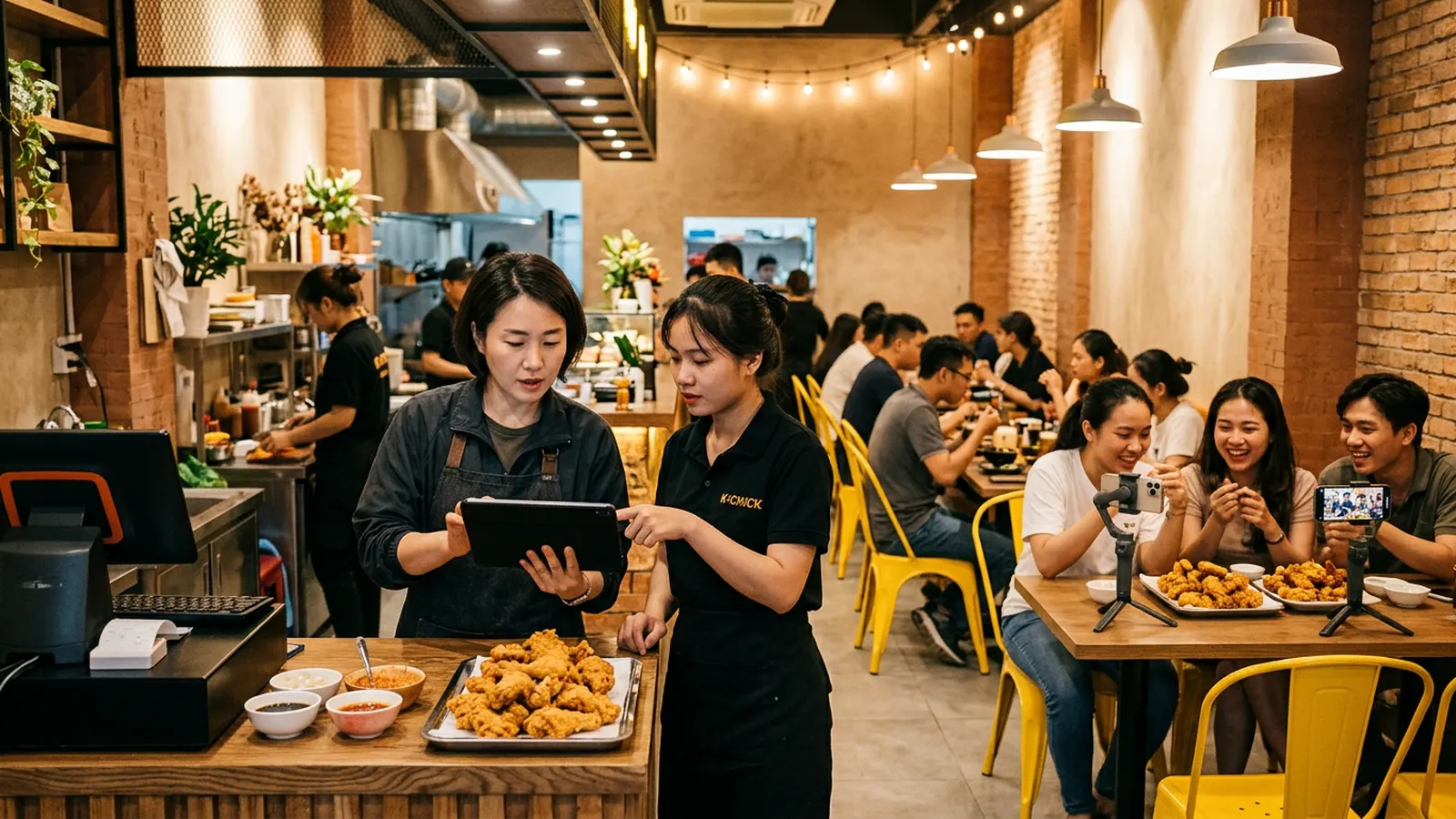
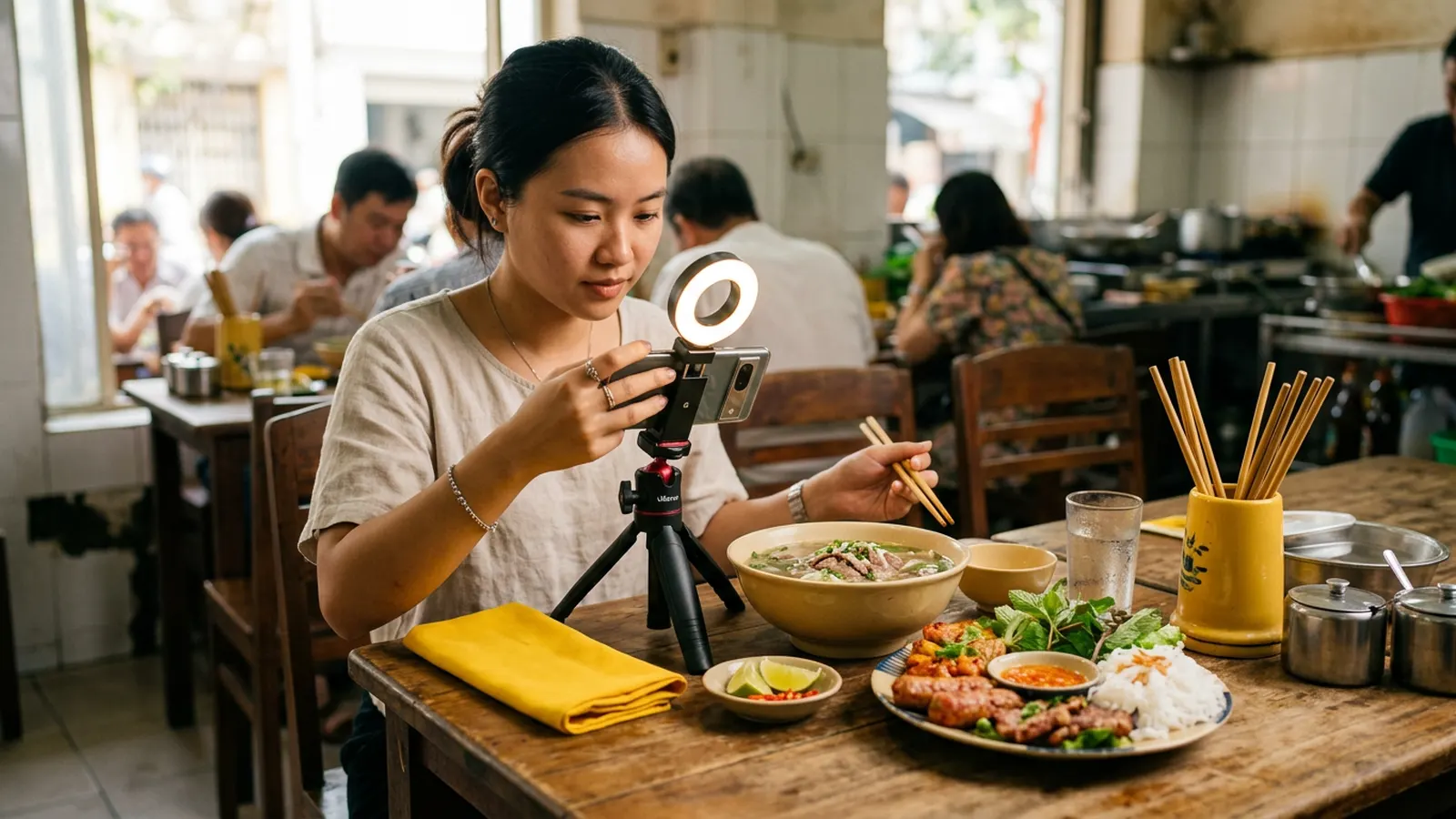
Foot-traffic campaigns put a place on a creator audience map. The creator visits, tastes, films and tells viewers why the place is worth the trip. The value is local relevance, so a creator whose followers live in another city helps little.
Most venues combine two creator types: food reviewers who produce a polished first impression, and everyday KOCs whose casual visit videos feel like word of mouth. Plan the visits across a few weeks rather than in one burst so the venue keeps appearing in feeds.
- Check where the creator's audience actually lives
- Match the creator's taste and price level to your menu
- Plan visits outside rush hour so staff can serve properly
- Offer a standard tasting menu so every video shows your best dishes
3. How do you choose food creators for a venue?
Start from the guest you want and work backwards. A student cafe, a business lunch spot and a family restaurant each need different creators, and the right one is rarely the largest.
Review a creator's last 15 to 20 food videos. Look for clear shots of the dish, honest comments on taste, comments from viewers who say they visited places before, and a consistent area. Ask for audience location and top cities from their analytics rather than guessing.
4. What should a restaurant visit brief include?
A good brief tells the creator what the venue is proud of and leaves the rest to them. Over-scripted food videos read as ads and lose the trust that makes food creators valuable.
Share the dishes to try, the opening hours, the address and parking notes, any campaign hashtag, and the disclosure line. Ask for at least one clear close-up, one wide shot of the space and an honest verdict. Agree what happens if the creator dislikes something: most brands accept honest feedback privately and a fair public review.
5. What about delivery-app and map reviews?
Delivery apps and map listings influence the decision to order or visit, so brands want ratings to rise after a campaign. Do not pay or ask creators for fake reviews. Platforms set their own review policies and can remove content or penalize listings, so read each app's current rules before you plan anything.
A safer approach is to ask creators to show viewers how to find the venue or the delivery listing, and to let real guests review on their own. Train staff to invite genuine feedback after good service.
6. How does packaged food use creators on TikTok Shop?
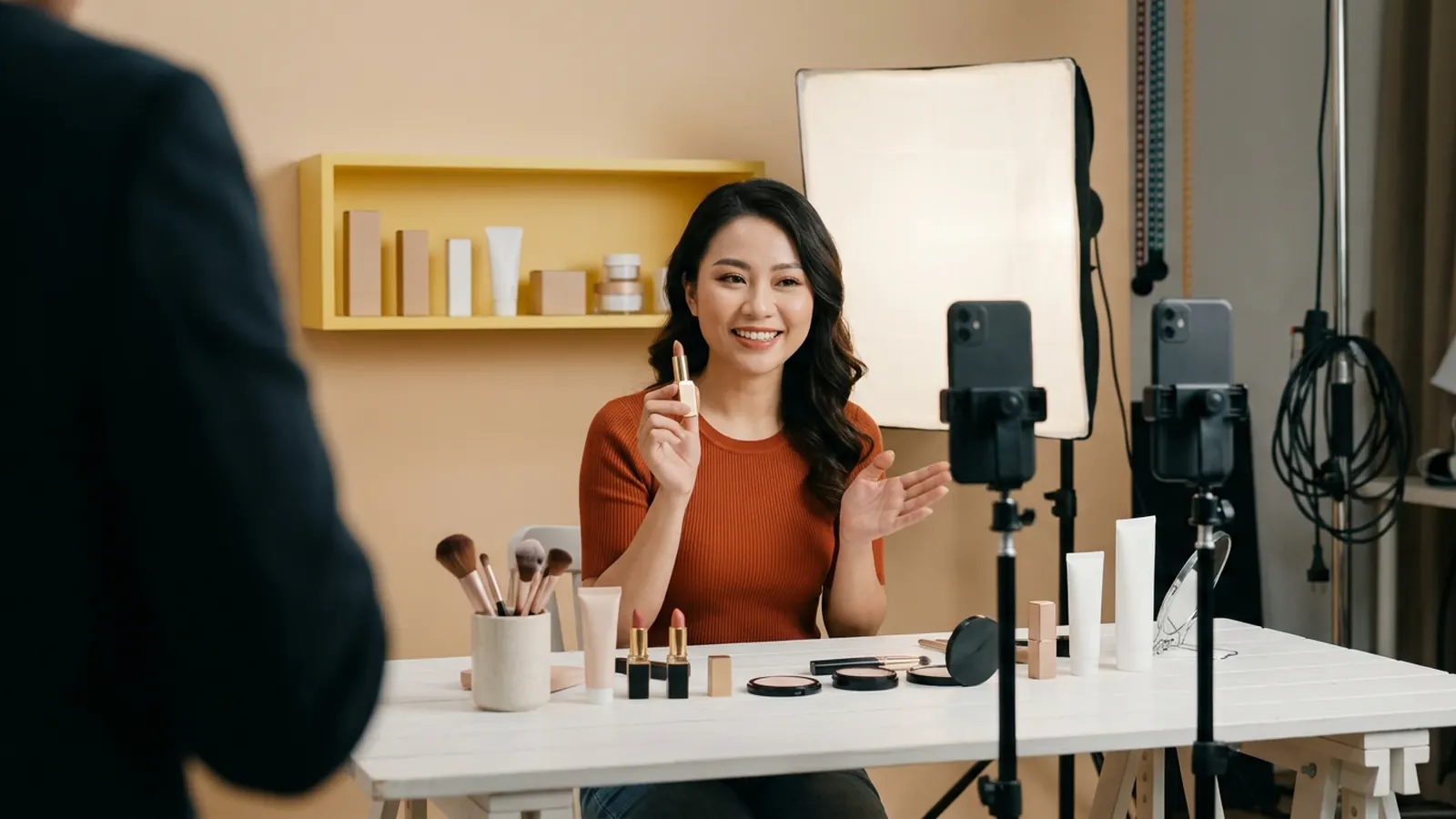
Packaged food sells on demonstration and trust. Creators who cook with a product, taste it on camera or show how it fits a daily routine give viewers a reason to click. Affiliate links let you pay commission only when an order is attributed.
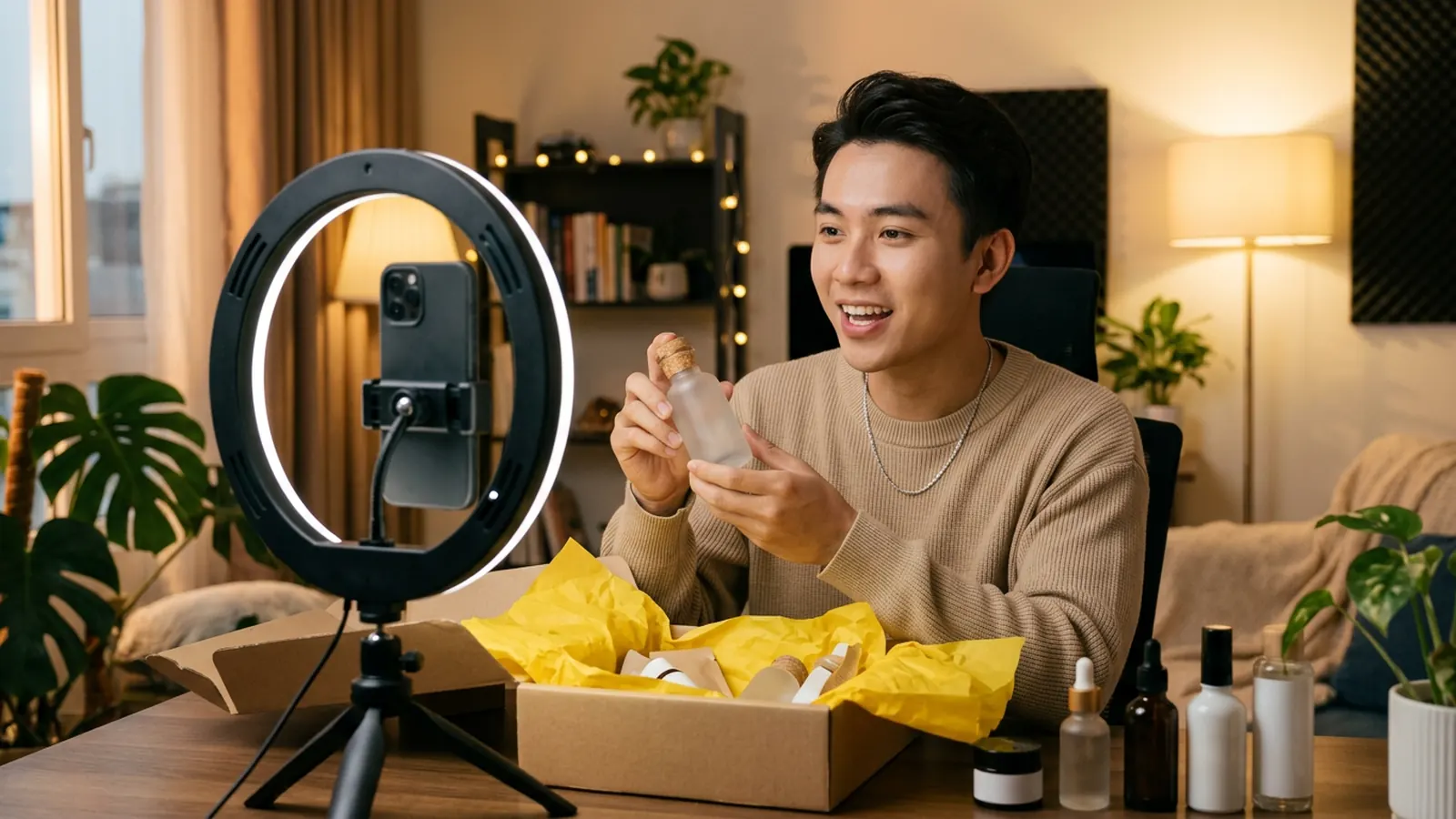
Ship samples with the product page already live, give creators a clear explanation of flavors and usage, and ask for a short video that shows the product being prepared and eaten. Our TikTok Shop affiliate guide covers the commission mechanics.
7. How do you track results for each game?
Give every creator their own trackable signal. For venues, use a creator-specific voucher or a spoken phrase staff can redeem, and log redemptions per day. For packaged food, use each creator's affiliate link and compare attributed orders with samples sent.
Add a simple question at the till or in checkout: how did you hear about us? It is imperfect but shows patterns the vouchers miss. Report by creator, by video and by week, and look at second visits or repeat orders, not just launch-week spikes.
8. How should an F&B creator budget be structured?
Build the budget from what each game needs. Venue campaigns usually carry food and beverage cost for the tasting, creator fees and a small reserve for repeat visits. Packaged food campaigns carry sample cost, shipping, commission and, if you boost winning videos, ad spend.
We do not quote prices because fees depend on audience, format, usage rights and the season. Our booking cost guide lists the factors to negotiate.
9. What compliance points matter?
On disclosure, Vietnam's Advertising Law as amended by Law 75/2025/QH15, in force from 1 January 2026, adds Article 15a, which requires influencers to announce that content is an advertisement immediately before or during it and to check the advertiser and the product documents. Put the disclosure wording in every brief.
Food and drink advertising and health or nutrition claims have their own rules, which we have not verified for this article. Check them with your legal adviser or the relevant authority before using claims such as healthy, natural or good for a condition, and keep documents ready for every claim.
10. What does a 30-day F&B creator plan look like?
Keep the first month small and measurable.
- Week 1: set the goal, shortlist 15 creators, prepare tasting menu or sample kit and tracking
- Week 2: book 8 to 10 creators, send briefs, schedule visits or ship samples
- Week 3: publish, collect screenshots, answer comments quickly, log vouchers or orders
- Week 4: review by creator, keep the best 2 or 3 for repeat content, drop the rest
11. Which mistakes cost F&B brands the most?
The costly ones are avoidable: booking creators outside the venue's catchment, scripting reviews so tightly that they sound fake, ignoring staff readiness on visit days, and judging the campaign only on views. A food creator who sends traffic to a venue that cannot serve it well will leave a bad impression for both sides.
If you are a Korean brand opening in Vietnam, our franchise launch plan builds on this guide with an eight-week timeline.
FAQ
Frequently asked questions
Should a restaurant use KOLs or KOCs?
Most venues get more value from a mix of local food reviewers and everyday KOCs than from one large name. Choose by where the audience lives and how well the creator's taste fits your menu.
How do I know if a food creator really sends customers?
Give each creator a unique voucher or phrase and compare redemptions with the number of videos posted. Also ask new guests how they found you.
Can I give creators free meals?
Yes, many venues do, but gifted content must still be disclosed as advertising under Article 15a of the amended Advertising Law. State the arrangement in the brief.
Is TikTok Shop suitable for packaged food?
It can be, if the product is easy to demonstrate and your margin supports commission and samples. Start with a small creator test before scaling.
What if a creator dislikes the food?
Agree beforehand that honest feedback is welcome. Many brands ask for private feedback first and accept a fair public review, because forced praise damages trust.