Korean Brands in Vietnam
A 90-Day Creator Launch Plan for Korean Brands Entering Vietnam
Most Korean brands arrive in Vietnam with a product and a deadline, and no sequence. This 90-day plan gives the sequence: build proof with small creators first, open the sales machinery second, and spend big money only on videos that have already worked. Each phase lists the decisions to make, the documents to prepare and the checkpoint that tells you whether to continue. Budget is expressed as priorities, not amounts, because your product, margin and channel decide the numbers.
Short answer
What should a Korean brand do in its first 90 days in Vietnam?
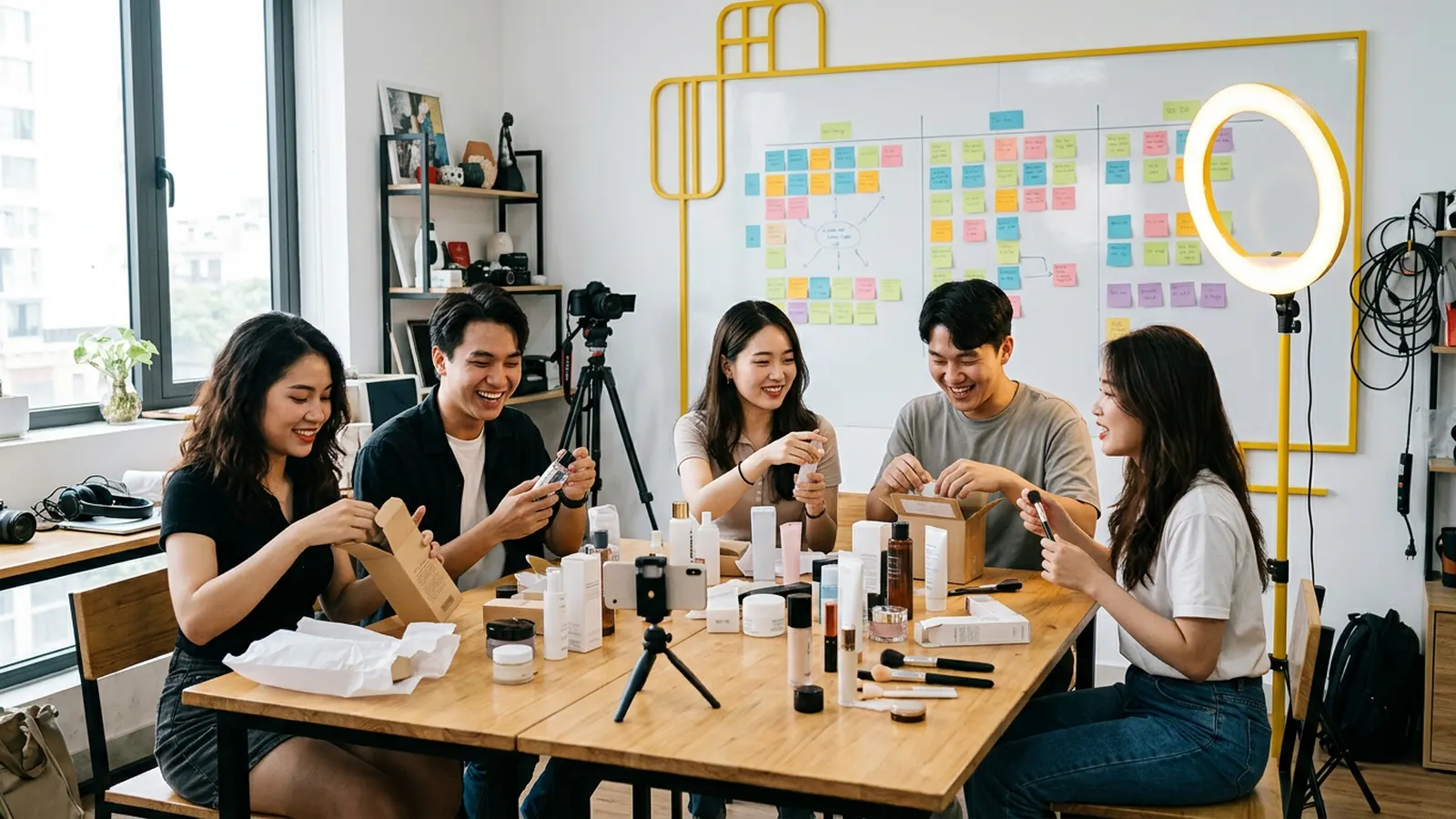
Work in three phases. Days 1 to 30: seed KOCs and build search coverage. Days 31 to 60: open the shop, set up affiliate and run the first livestreams. Days 61 to 90: amplify proven videos with KOLs and ads. Move to the next phase only when the checkpoint is met.
- Days 1 to 30: seeding and search coverage
- Days 31 to 60: shop, affiliate, first lives
- Days 61 to 90: KOL amplification and ad scaling
- A checkpoint at the end of every phase
- Budget as priorities, with most spend after proof
- Documents and claims ready before day one
1. Why does a launch need a 90-day sequence?
Spending on celebrities first is the classic mistake. Without product pages, reviews and search results, traffic from a big name has nowhere to land and conversion disappoints.
A sequence builds proof cheaply, then spends where proof exists.
2. What must be ready before day one?
Prepare product documents and permitted claims, Vietnamese product naming, packaging and label compliance, stock location, a shop or sales channel and a reply person who speaks Vietnamese.
Check the advertising and product rules for your category with a local adviser, since categories such as cosmetics and supplements carry extra requirements.
- Product documents and approved claims
- Vietnamese name, label and listing copy
- Stock and fulfilment confirmed
- Sales channel and account owner
- Brief, contract and approval flow
3. Days 1 to 30: what is the seeding goal?
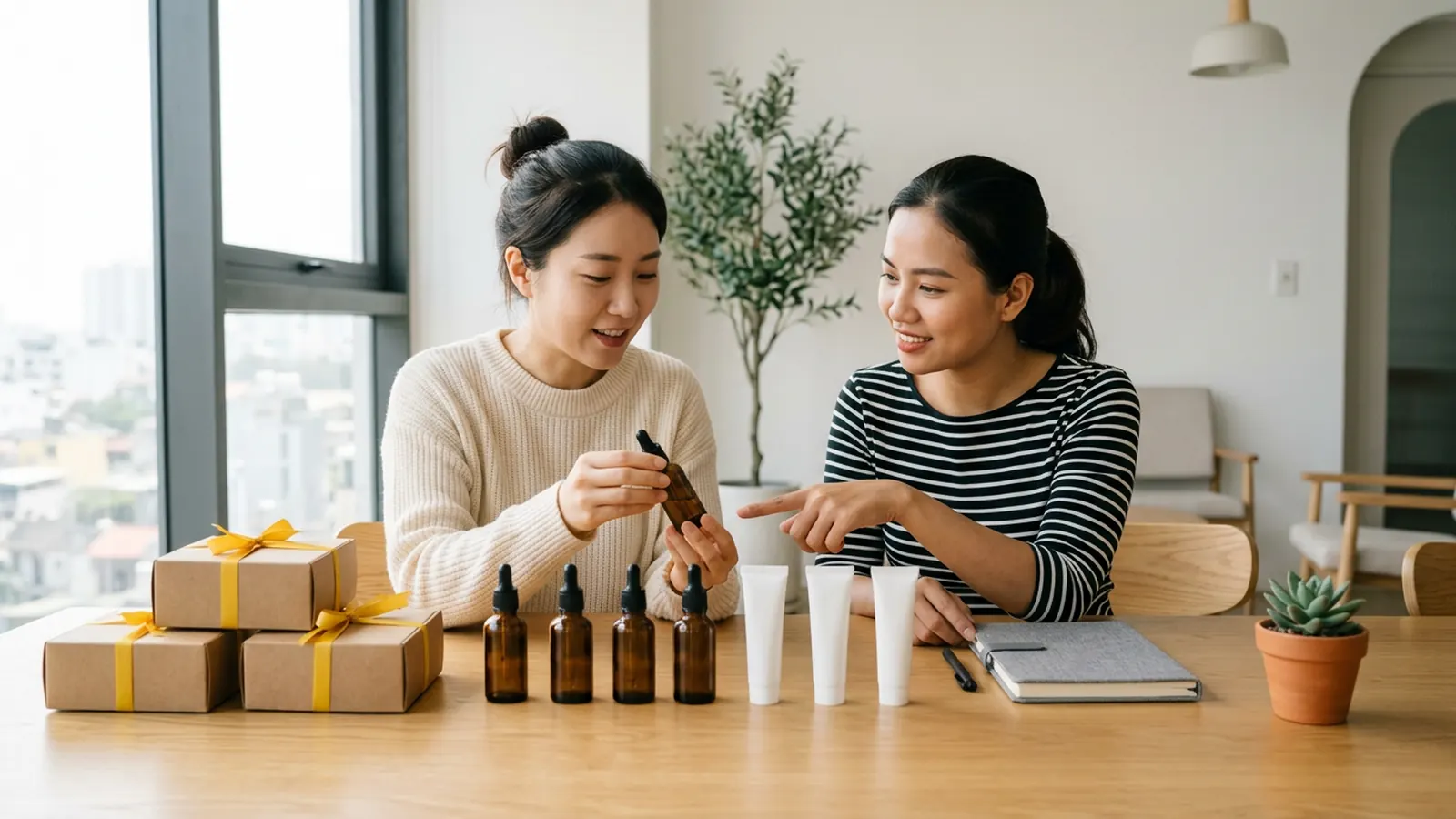
The goal is proof, not sales: real Vietnamese reviews, usable footage and search visibility. Send products to a modest group of KOCs whose audience fits the product.
Our K-beauty seeding guide shows how to structure the shipment and the brief.
- Choose a small seeding group
- Request honest reviews with required disclosure
- Collect footage for later ads and listings
- Note repeated questions and objections
4. How do you build search coverage early?
Vietnamese shoppers search platforms before buying. Aim for content that answers the questions people type: product name, ingredient or use, comparison and routine.
Ask creators to include the exact product name and to keep claims inside your approved list.
5. What is the day-30 checkpoint?
Before spending more, check that you have a set of usable videos, a consistent list of customer questions, product pages that match what creators say and no compliance problems.
If reviews reveal a product or price issue, fix it now. It is far cheaper than fixing it at scale.
6. Days 31 to 60: how do you open the shop and affiliate?
Open the shop, load listings using what seeding taught you, and set up an affiliate programme so creators can earn from sales. Entry rules for Korean sellers depend on your route, so confirm them in the platform seller centre.
Our entry-route guide covers the options.
7. How do you recruit affiliate creators?
Use your seeding group as the first affiliates, then open the offer to more creators. Keep commission rates inside your margin and explain them clearly.
Our affiliate guide explains the setup and the creator pitch.
8. When should you run the first livestreams?
Start with short, scripted lives hosted by a creator who has already reviewed the product, with a clear offer and a stock check. Treat the first lives as rehearsals and note what breaks.
Do not promise discounts you cannot honour.
9. What is the day-60 checkpoint?
Review orders, conversion, refund reasons, creator response time and content performance. Identify the three to five videos that clearly outperform the rest.
Those videos, not your plan, decide where money goes next.
10. Days 61 to 90: how do you amplify what works?
Book KOLs where reach adds value, and put paid support behind videos that already convert. Boosting a weak video only buys expensive attention.
Our GMV Max guide covers paid support for creator videos.
- Boost proven videos only
- Add KOLs for reach and credibility
- Refresh hooks of winners rather than starting over
- Keep a testing slice for new creators
11. How should you think about budget?
Think in shares and priorities: a smaller share for seeding and setup, a growing share for creators who sell, and the largest share only after the day-60 checkpoint, for what proved itself.
Set totals from your margin and target payback, and never copy a number from another brand.
12. What happens on day 91?
Write a short review: what worked, what did not, what the product needs and which creators to keep. Turn the best creators into a standing programme and plan the next quarter.
A launch ends with a repeatable process, not just sales.
FAQ
Frequently asked questions
Should we hire KOLs first or KOCs?
KOCs first for cheap proof, then KOLs to amplify what already works.
How many products should we launch with?
Fewer is easier. One or two hero products let you learn faster than a full range.
Do we need our own shop on day one?
Not necessarily. Seeding and search coverage can start before the shop is live, depending on your route.
When do we start paid ads?
After you have videos that convert. Paid support on weak content mostly wastes money.
Is this plan legal advice?
No. Check advertising, product and tax rules for your category with a local adviser.