Creator Career
How to Become a KOC in Vietnam: A Practical Step-by-Step Guide
KOC — key opinion consumer — is the fastest entry point into Vietnam's creator economy. Unlike influencers who chase fame, KOCs earn through honest product reviews, TikTok Shop affiliate commissions and small paid bookings. You do not need a big following to start; you need a niche, consistency and the right setup.
Short answer
How do you become a KOC in Vietnam?
Pick a niche you can talk about for months, set up a TikTok or Facebook account dedicated to honest reviews, join TikTok Shop affiliate programs for products in your niche, and post 3–5 review-style videos a week. Once you have consistent content and engagement, apply to seeding programs, affiliate campaigns and creator marketplaces to start earning.
What does a KOC actually do day to day?
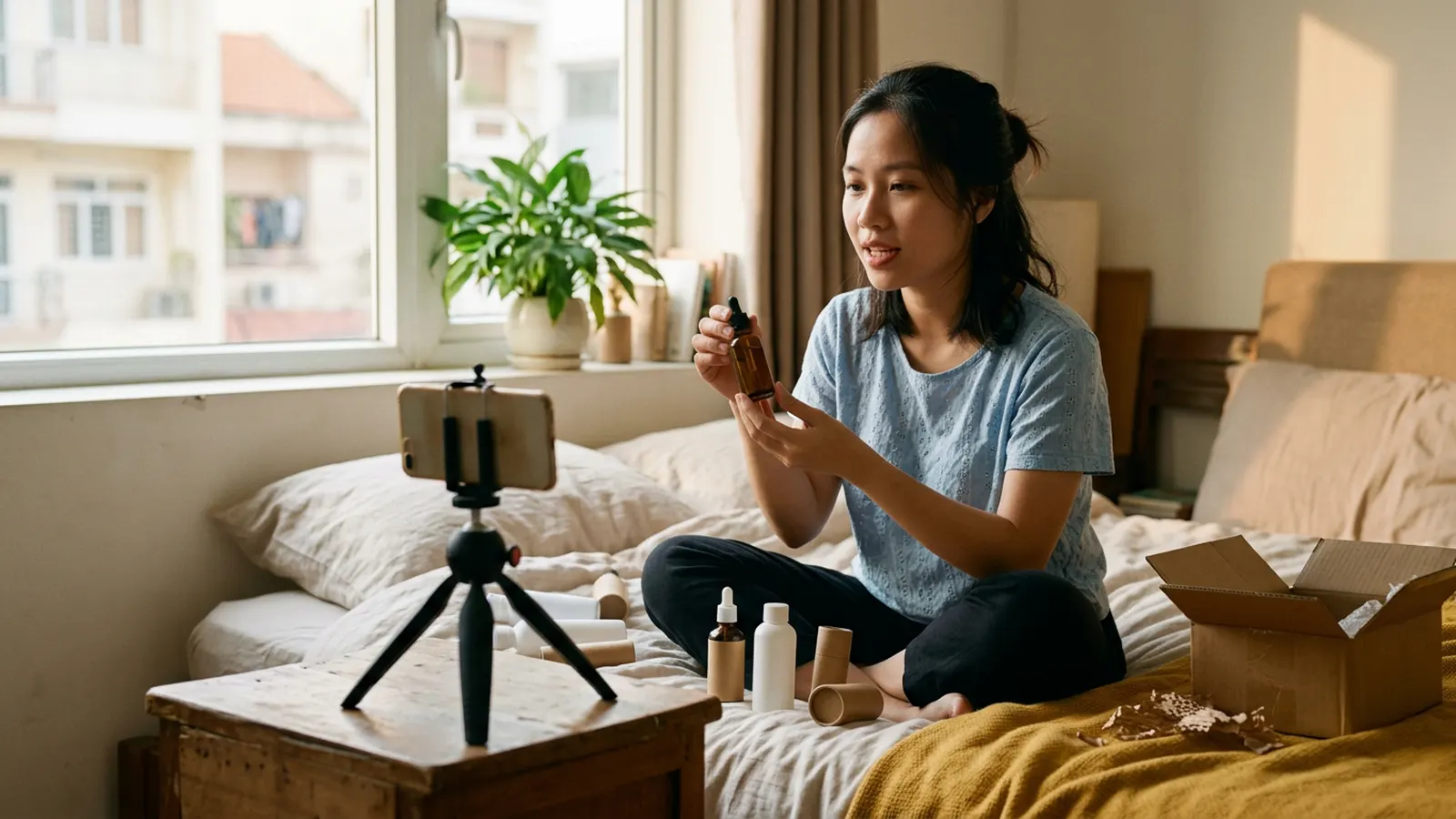
A KOC creates short-form content — mostly TikTok and Facebook Reels — that reviews products the way a real customer would: unboxing, honest pros and cons, "would I buy this again" verdicts. The content looks casual but follows a structure that converts viewers into buyers.
KOCs earn in three ways: affiliate commission on TikTok Shop or Shopee sales, free products through seeding, and flat fees for paid brand bookings. Most start with affiliate and seeding, then graduate to paid deals as their content and engagement prove consistent.
Step 1: Pick a niche you can sustain
The biggest reason new KOCs quit is picking a niche they cannot sustain. Beauty, skincare, household goods, fashion, food and gadgets are the strongest categories in Vietnam because brands in these verticals run large KOC campaigns.
Choose something you already buy and use. Authenticity is the entire product — viewers can tell within seconds whether you actually use the serum or are reading a script. Narrow beats broad: "drugstore skincare under 200K VND" outperforms "everything beauty" every time.
Step 2: Set up your accounts and equipment
You do not need expensive gear. A smartphone with a decent camera, a $15 ring light, and a quiet corner with natural light is enough for your first 30 videos. What matters is consistent framing, clear audio and honest lighting — viewers forgive shaky footage, not echoey audio.
Create a dedicated account for your reviews rather than mixing personal content. A clear bio stating your niche ("review mỹ phẩm drugstore", "đồ gia dụng dưới 300k") tells brands and TikTok Shop's algorithm exactly who you are.
Step 3: Learn the review formats that convert
The highest-converting KOC formats are: honest "after 30 days" reviews, comparison videos (product A vs B), price-tier reviews ("skincare under 200K"), unboxing-with-verdict, and problem-solution content ("da dầu thì dùng gì").
Keep videos 30–90 seconds for TikTok, front-load the verdict in the first 3 seconds, and always show the product in use — not just held up to the camera. Vietnamese audiences respond strongly to "mình mua thật, dùng thật" energy; scripts that sound like ads get skipped.
Step 4: Join TikTok Shop affiliate and seeding
TikTok Shop affiliate is the main earning channel for new KOCs in Vietnam. Apply through the TikTok Shop seller or creator portal, pick products in your niche with healthy commission rates (typically 10–20%), and include the affiliate link in your videos.
Seeding programs — where brands send free products for honest reviews — are harder to access directly but easier through KOC agencies and creator marketplaces. Many agencies run open seeding calls for nano and micro creators; applying to 5–10 per month is normal while you build your portfolio.
How TikTok Shop affiliate works for KOCsProduct seeding campaigns explained
Step 5: Post consistently and read your analytics
Brands and agencies vet KOCs on three numbers: posting consistency, average views, and engagement rate. You do not need viral hits — you need predictable output. Three to five videos a week for two months creates a portfolio that booking platforms can evaluate.
Watch which formats get saves and shares (those signal purchase intent) versus just likes. A video with 5K views and 200 saves is more valuable to a brand than 50K views and 100 likes — saves mean people plan to buy.
Step 6: Get on booking channels
Once you have 10–15 solid videos, apply to creator marketplaces and KOC agencies that connect Vietnamese brands with nano and micro creators. Platforms like Roster and agency rosters let you set your rates, showcase your content, and receive booking requests.
Cold outreach works too: find brands in your niche on TikTok Shop, check if they run affiliate programs, and pitch a sample video. Keep a simple media kit — follower count, average views, top 3 videos, niche, and rates — ready to send.
Step 7: Price your work and protect yourself
Nano KOCs (under 10K followers) typically start with affiliate-only or product-only deals. Micro KOCs (10K–100K) can charge modest flat fees — common ranges in Vietnam run from a few hundred thousand to a few million VND per video depending on niche and deliverables.
Always get the deal in writing: what videos, how many revisions, usage rights (can the brand run your video as an ad?), posting dates, and payment terms. Vietnam's advertising law requires paid content to be labeled — a legit brand will ask you to disclose, and you should want that in the contract.
Realistic income expectations
Most new KOCs earn little in the first 1–3 months — affiliate commissions of a few hundred thousand VND monthly plus occasional free products. The income curve steepens around months 4–6 once you have a portfolio and repeat brand relationships.
Full-time KOC income in Vietnam is achievable but rare at nano scale; most sustainable earners combine affiliate commissions, 2–5 paid bookings monthly, and occasional seeding. Treat the first months as paying for your portfolio and skills, not as salary.
Common mistakes new KOCs make
The top mistakes: promoting anything for commission regardless of quality (kills trust fast), buying followers or engagement (brands check), posting irregularly then expecting bookings, and accepting deals without disclosed terms or clear usage rights.
The quieter mistake is niche-hopping every two weeks. Algorithms and audiences both reward depth — a creator known for honest skincare reviews gets more brand inbound than one who posts skincare, gadgets and food randomly. Pick one lane and stay in it until it pays.
Your first 30 days as a KOC
Week 1: pick your niche, create the account, film your first 3 review videos using products you already own. Week 2–3: post 4–5 videos, join TikTok Shop affiliate, apply to 5 seeding programs. Week 4: review analytics, double down on your best format, and start pitching brands with a sample video.
By day 30 you should have 10+ videos, an affiliate account, and a clear sense of which format your audience responds to. That is enough to start getting seeding offers and your first paid inquiries.
- Niche: one you actually use, narrow enough to be known for
- Output: 3–5 videos/week minimum for the first 60 days
- Earnings path: affiliate → seeding → paid bookings
- Protection: written deals, disclosed ads, clear usage rights
FAQ
How to become a KOC in Vietnam: FAQ
Do I need followers to become a KOC?
No. Most KOCs start at nano scale (under 10K followers) or even with a new account. Brands care more about content quality, niche fit and engagement rate than raw follower count — a 5K creator with genuine reviews often outperforms a 50K creator with bought followers.
How much does a KOC earn in Vietnam?
It varies widely. New KOCs typically earn a few hundred thousand to a couple million VND monthly from affiliate commissions and free products. Established micro KOCs with consistent bookings can earn several million VND monthly. Full-time sustainable income usually takes 4–6 months of consistent content.
Is being a KOC the same as being an influencer?
KOCs are a type of influencer, but the focus differs. Influencers typically monetize reach and brand association; KOCs monetize trust and conversion through honest review-style content, usually at nano-to-micro scale. The content looks like a customer review, not a polished ad.
What equipment do I need to start as a KOC?
A smartphone with a decent camera, a ring light (around $15–30), and a quiet space with good natural light. Audio quality matters more than video resolution — viewers forgive shaky footage but not echoey sound. Total starting cost can be under $50.
How do I get my first paid KOC booking?
Build 10–15 quality review videos first, then apply to KOC agencies and creator marketplaces, join seeding programs, and pitch brands directly with a sample video. Nano creators often start with product-only or affiliate-only deals before graduating to flat fees.
Do KOCs need to disclose paid partnerships in Vietnam?
Yes. Vietnam's amended advertising law requires paid content to be clearly labeled as advertising. Legitimate brands will require this in the contract — and you should want it written down along with usage rights, posting dates and payment terms.