Creator growth
Vietnamese Tips for Content Creators: The Complete Vietnam Playbook
Looking for Vietnamese tips for content creators that work beyond the next viral trend? This is a practical, creator-first guide to building a recognizable account in Vietnam, whether you post product reviews in Vietnamese, teach a skill on YouTube, create UGC for brands or document life in Ho Chi Minh City. You will learn how to choose an audience, research topics, plan and produce short videos with a phone, evaluate performance without obsessing over vanity metrics, and turn a content portfolio into professional collaborations. The examples are working templates, not promises of views, followers or income.
Short answer
What should a new content creator in Vietnam do first?
Start with one identifiable audience and a useful content promise. List 20 questions that audience asks, make five repeatable video formats, publish consistently enough to learn, and review saves, shares, watch behaviour and relevant enquiries instead of judging success by one viral post. Treat a brand collaboration as a business deal: agree on deliverables, usage rights, compensation and advertising disclosure before recording.
- Choose one audience, one problem and one clear promise for your channel.
- Build ideas from genuine comments and search queries, not just trends.
- Script a specific opening, one useful point and a next action.
- Film vertical with clean audio, readable captions and visible proof.
- Compare the median performance of recent posts by format.
- Keep a portfolio, a written brief and a disclosure checklist ready.
1. Define the audience before choosing a platform
A channel about everything is hard for viewers to remember. Start with the person you want to help: a university student learning English, a first-time parent buying affordable essentials, a small café owner, or someone comparing skincare for humid weather. Describe the person's need in plain Vietnamese, including what they already tried and what decision they face.
Write a one-line positioning statement: I help [specific people] achieve [specific result] using [repeatable format]. For example: I help students in Vietnam compare low-cost learning tools through 45-second real-world demos. This is a creative constraint, not a rule that you must stay in one niche forever.
Separate your target viewer from your target customer. An audience may enjoy your content while a brand pays for licensing the videos you produce; those are related but different business models.
- Primary audience: age or life stage, city/region, language, need and budget.
- Content promise: a recurring problem your posts solve.
- Proof: experience, tests or expertise you can actually demonstrate.
- Business goal: audience growth, UGC portfolio, affiliate traffic or brand bookings.
2. Choose a niche you can sustain for at least 30 posts
Good niches sit at the intersection of knowledge, personal curiosity and repeated audience demand. Vietnam-specific angles can be more useful than copying an overseas trend: product prices in VND, humid-climate use cases, local store availability, regional food, learning or transport habits, and honest comparisons across price points.
Before committing, write 30 video ideas under three distinct pillars. If you cannot reach 30 without repeating yourself, narrow or adjust the angle. Do not take a competitor's script, footage or testimonial as your own.
- Teach: explain a process, mistake or question.
- Test: compare options with visible evidence and clear limits.
- Document: show real progress, lessons and behind-the-scenes work.
- Connect: answer thoughtful audience questions and objections.
3. Research Vietnamese search intent, not just trending sounds
Open the search bars on the platforms your audience already uses. Search terms such as cách chọn, có tốt không, nên mua, giá bao nhiêu, review thật and alternatives next to your subject. Record the autocomplete suggestions, the recurring questions in comments, and the language people use when describing their problem.
TikTok's Creator Search Insights offers topic ideas from search behaviour in supported regions. Availability varies by account and market, so check whether the tool appears in your own app rather than assuming every Vietnamese account has it. TikTok publicly explains that content information and user interactions influence recommendation and search systems; repeating a keyword does not guarantee ranking.
Build a spreadsheet with query, intent, viewer pain point, proposed angle, evidence available and status. One good search question can support a tutorial, a comparison, a myth-check and an FAQ.
- Informational: how to, checklist, explanation.
- Comparison: A vs B, best for a specific need.
- Commercial: real test, price, where to buy, limitations.
- Follow-up: common objections, troubleshooting, results after use.
4. Write hooks that promise a useful payoff
A hook is the first clear reason to keep watching. It should match the content rather than manufacture suspense. For a product review, try: I tested this microphone in a noisy café—listen to the difference. For a tutorial: Three mistakes that make Vietnamese subtitles hard to read. For a comparison: This is what changes between a 300,000 VND light and a 1 million VND light.
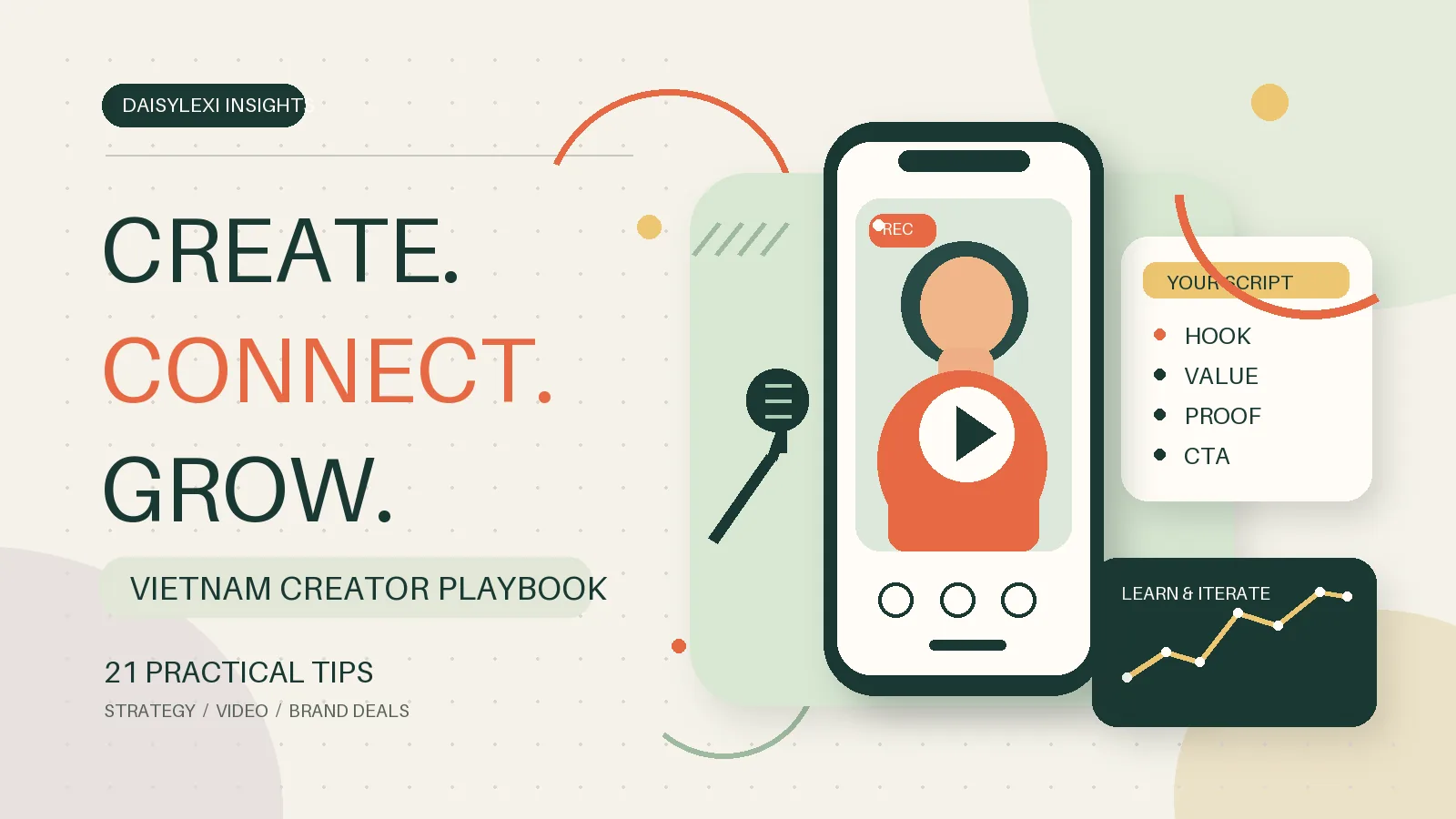
A simple script has four beats: viewer problem, evidence or demonstration, decision or takeaway, and relevant next action. You do not need a fixed 3-second rule; test whether the opening explains the benefit before viewers swipe away.
Keep the promised answer visible. A dramatic title followed by unrelated footage may increase curiosity clicks but damage trust and retention.
- Problem: say the exact friction in the audience's own words.
- Context: show why your experience is relevant.
- Evidence: demonstrate, compare or explain with specifics.
- Payoff: give the answer before the video ends.
- CTA: ask one natural follow-up, not five unrelated actions.
5. Use a repeatable filming setup, not expensive gear
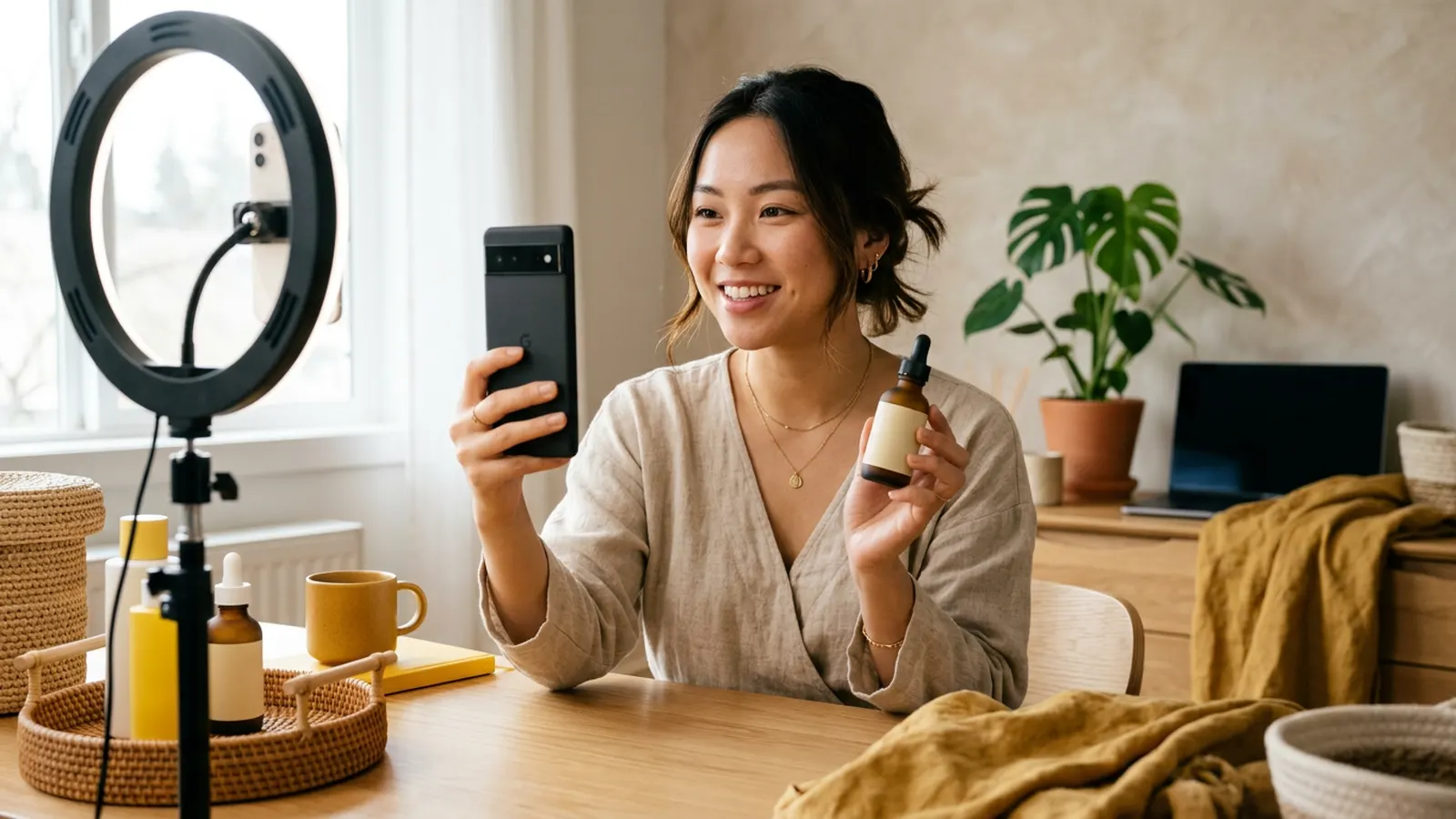
A smartphone, a stable surface and understandable sound are enough to test a format. Film vertical video when producing for vertical-first feeds, leave room around the face and product for app interface overlays, clean the lens, and record a short sound test before a full take.
Choose window light or a soft light source aimed toward the subject. Turn off noisy fans where practical, stay close enough for the microphone to capture speech, and avoid excessive beauty filters when your audience must judge real texture, colour or product results.
Create a mini shot list: wide context, close-up proof, hand demonstration, reaction, and a final takeaway. For an honest review, show the product in use and state the conditions of your test.
- Frame a clean vertical shot and check focus/exposure.
- Capture clean audio; subtitles are support, not a rescue for inaudible speech.
- Record enough detail shots to cover cuts and explain claims.
- Keep original footage and permission records in organized folders.
6. Edit for clarity, accessibility and viewer trust
Cut pauses that add nothing, but leave enough time to understand key steps. Use short on-screen phrases that reinforce spoken ideas rather than covering the entire frame. Check captions for Vietnamese dấu, proper names, prices and product terminology; automatic speech recognition frequently needs human corrections.
Use sufficient colour contrast and avoid placing important text where captions, app buttons or the description overlay may hide it. If a video relies on a diagram, describe what changes verbally as well. Do not fabricate screenshots, analytics or before-and-after results.
Music and third-party clips require appropriate rights. A track available in one account or region may not be cleared for all commercial campaigns or paid ads; verify rights before using it in sponsored work.
- Readable captions checked manually.
- Single key message per shot or visual beat.
- No fake testimonials, altered outcomes or misleading cropping.
- Commercial-use permissions checked for audio, footage, fonts and images.
7. Tailor one idea to TikTok, Instagram, YouTube and Facebook
Do not assume one export and one caption perform identically everywhere. Keep the core lesson, but adapt the opening, cover, text length, tags and call to action to the expectations of each audience. A useful TikTok review can become a calmer Instagram Reel, a searchable YouTube Short and a conversation starter in a Facebook community.
For TikTok, pay particular attention to the viewer's search wording and an early on-screen explanation. For Instagram, use its Professional Dashboard Best Practices as a current platform reference. For YouTube Shorts, make the topic understandable without prior context and connect to relevant longer videos when appropriate. For Facebook, consider the norms and moderation rules of the group or page where the clip appears.
These are starting hypotheses; platform recommendation systems evolve. Evaluate results in your own analytics, not a universal posting-time chart.
- TikTok: search-led problem, demonstration, natural keywords.
- Instagram Reels: visual clarity, a recognizable creator identity, saves and shares.
- YouTube Shorts: specific searchable question, durable answer, channel context.
- Facebook: community relevance, conversation and group rules.
8. Make your Vietnamese captions searchable and natural
Use the primary phrase in the opening text, spoken explanation and caption only when it fits naturally. Write how people in Vietnam actually ask the question, including common abbreviations and regional variants when helpful. A location term belongs in a video only if the answer truly changes by location.
A practical caption pattern is: search question or benefit, one-sentence answer, useful detail, then one action. Add a small set of descriptive hashtags instead of flooding the post with unrelated trending tags. On your portfolio site, use descriptive page titles, alt text and accurate internal links; platform SEO and Google SEO are different workflows.
Avoid treating hashtags, trending audio, video length or publication hour as guaranteed ranking signals. Use the platform's own data to test which elements help your audience.
- Question first: Có nên mua mic rời để quay TikTok?
- Answer: Test thực tế trong phòng yên tĩnh và quán cà phê.
- Specifics: price, model, distance, and conditions of the test.
- Action: Save this checklist if you are filming next week.
9. Build a content calendar you can actually maintain
Consistency means a workable production rhythm, not posting every day at any cost. A small creator may get more learning from three well-made posts a week than seven rushed duplicates. Choose a cadence you can sustain for a month, then review both outcomes and the hours each post costs.
Batch the thinking, not the authenticity: collect ideas and write several outlines in one session, film similar setups together, and reserve a separate block to edit subtitles and check facts. Leave room for reactive content when your audience asks a timely question.
Keep a simple status board: idea, researched, scripted, recorded, edited, checked, scheduled, published and reviewed. Reuse formats; do not recycle someone else's content without permission.
- Monday: collect questions and choose two or three topics.
- Tuesday: scripts, claims and shot lists.
- Wednesday: batch filming.
- Thursday: edit, caption and check links/claims.
- Friday to Sunday: publish, reply and annotate results.
10. Run a 30-day experiment instead of chasing one viral post
For week one, publish examples from two content pillars. In week two, revise openings based on actual viewer behaviour. In week three, repeat the strongest useful format with a different question. In week four, compare formats and decide what to keep, refine or stop.
Use a controlled hypothesis such as: direct demonstrations may receive more saves than talking-head explanations for this audience. Change one major variable at a time where possible. Organic distribution is noisy; a small sample shows directional clues, not statistical certainty.
Document the creator's time and production cost alongside views. A post with moderate reach that brings relevant portfolio enquiries can be more valuable than a viral post watched by the wrong audience.
- Week 1: establish audience and baseline.
- Week 2: test two opening styles with similar topics.
- Week 3: build a series from the most useful format.
- Week 4: review median performance, inbound leads and effort.
11. Read analytics without fooling yourself
Start with the outcome of the post: discovery, learning, consideration, enquiries or sales. Views alone cannot answer every question. Use median views from recent comparable posts instead of the average when one viral clip distorts performance. Keep organic and paid metrics separate.
For short video, inspect the first part of the retention curve, average watch time when available, completion, saves, shares and meaningful comments. For creator business work, also track profile visits, qualified messages, portfolio clicks, confirmed briefs and paid invoices. Not every platform exposes every metric.
Simple formulas help: engagement rate by views = (likes + comments + saves + shares) / views × 100; enquiry-to-booking rate = confirmed bookings / qualified enquiries × 100. Define which interactions your platform actually provides and use the same denominator in comparisons. Do not present estimates as measured ROI.
- Median views of your last 10 comparable non-pinned posts.
- Completion or watch-time trend for similar-length videos.
- Saves and shares per 1,000 views where available.
- Profile visits, clicks, inbound enquiries and repeat clients.
- Time spent per video and revisions required.
Creator performance scorecardCreator campaign reporting and ROI
12. Turn comments into your next content series
Comments are qualitative research. Group them into requests for clarification, objections, problems, price questions and stories from real viewers. Reply politely and decide which repeat questions deserve a video rather than answering each with the same long message.
Invite interaction that benefits people: What part should I test next? or Which situation matches yours? Avoid purchased comments, fake engagement circles and giveaways designed solely to inflate vanity metrics.
Manage your energy. A short daily reply window, basic moderation filters and boundaries for personal information are more sustainable than being available around the clock.
- Log questions in an idea bank.
- Answer respectfully and correct mistakes visibly.
- Moderate harassment and protect viewer privacy.
- Build mini-series from repeated questions.
13. Build a portfolio even before your first sponsorship
You can demonstrate your skill without pretending you were hired. Create three to six spec examples with products you own or subjects you understand, label them as self-initiated work, and show the role you played: research, scripting, shooting, editing or on-camera delivery.
Put your best samples in a simple, mobile-friendly page or PDF. Include your niche, production styles, languages, location, contact channel, deliverables and a link to the finished videos. If you offer UGC for paid advertising, show a product demo, a founder-style explainer and a problem-solution ad concept with no invented client results.
A portfolio is evidence of craft; a media kit shows audience and commercial context. Keep them separate or clearly labelled so a brand knows whether it is buying production or distribution.
- Short introduction with audience and niche.
- Three to six labelled, permission-safe samples.
- Recent authentic audience insights (when relevant).
- Formats offered and contact route.
- Usage rights and revisions described before quoting.
14. Understand UGC, KOC, affiliates and paid bookings
A UGC creator is usually paid to make content a business can use, with the licence and usage terms defined by contract. A KOC is an everyday product reviewer whose own audience may make the post valuable. An affiliate earns a commission linked to attributable actions under programme terms. One creator may do all three, but each deal needs a different quotation.
Do not sell only a follower count. Brands may care about your ability to explain a product, deliver authentic demonstration shots, meet deadlines and protect their claims. Ask whether the brand wants organic publication, raw files, usage in ads, editing rights, cross-posting or exclusivity before stating a fee.
If you receive a free product without a posting obligation, clarify that status. If compensation or an exchange creates a commercial endorsement, plan appropriate disclosure rather than assuming gifting is invisible.
- UGC production: creative output plus negotiated licence.
- KOC booking: publication to your audience plus deliverables.
- Affiliate: attribution, commission schedule and refund rules.
- Hybrid: base fee plus affiliate commission, with both parts in writing.
15. Quote brand deals with a written scope
There is no universal fair price per 1,000 followers. A fee depends on your effort, audience fit, production complexity, turnaround, usage period, paid-media rights and exclusivity. Quote the job you can verify instead of copying an anonymous rate card.
A sample quote could describe: one 30–45-second vertical review, one cover image, one revision round, publication on your channel for an agreed term and 30 days of organic reposting permission. If the brand later requests paid ads, full source files or category exclusivity, negotiate those separately.
Keep deposit/payment terms, invoice needs, shipping arrangements, cancellation, the number of revisions and what happens if the product arrives late in the written agreement. If you use an agency intermediary, confirm who approves and who pays you.
- Deliverables and technical format.
- Timeline, feedback owner and revision cap.
- Platform, link, tags and disclosure.
- Content ownership, licensed use, ad rights and duration.
- Fee, taxes, payment deadline and cancellation rules.
KOC booking costs and rate factorsNegotiating KOC ratesKOL/KOC contract checklist
16. Use a creator brief without losing your voice
A good brief distinguishes the facts the brand needs from your creative choices. It should tell you who the product is for, the approved claims, the required demonstration, the date, the delivery format and the approval contact. It should not force an invented personal story or a claim you cannot substantiate.
Before filming, ask for the product and its supporting documents. Clarify what you can say about price, results, eligibility and comparisons, as well as what to do if your genuine test contradicts the brand's script.
Keep the submitted draft, feedback and approved final version. In a multi-creator campaign, written approval avoids confusion about which version may be published.
- Read the brief and identify all unverifiable claims.
- Confirm product experience before making recommendations.
- Agree on what must be shown versus what you may phrase freely.
- Save approval, final assets and delivery receipts.
17. Follow Vietnam's advertising disclosure and product-claim rules
Vietnam's amended Advertising Law (Law 75/2025/QH15) has been in force since 1 January 2026. Article 15a sets duties for people carrying advertising and additional duties for influencers, including checking the advertiser and product information, not introducing products they have not used or do not sufficiently understand, and announcing advertising immediately before and during the activity. Social-media advertising must also be recognisable as advertising under the law.
For a sponsored video, an operationally safer workflow is to plan a clear Vietnamese disclosure at the beginning, an easily seen visual or caption label, and the platform's branded-content setting where available. The exact legal treatment depends on facts and platform rules; a hashtag alone may be insufficient. Keep documentation of the brief, claim evidence, product use, contract and approval.
Avoid unsupported medical, financial, cosmetic or superlative claims, even if a brand puts them in a script. This guide is educational, not legal or tax advice. Check the current legislation and consult a qualified local professional when working on regulated categories or complex payment structures.
- Verify the advertiser and supporting product documents.
- Disclose the commercial relationship clearly before and during promotion.
- Use real demonstrations and honest, bounded claims.
- Retain contracts, approved claims and evidence of posting.
- Confirm specific tax or livestream obligations with a professional.
18. Use AI as an assistant, not a source of invented proof
AI can help cluster comments, outline scripts, generate alternate hooks, translate captions and check a draft for missing steps. However, it cannot verify that a product actually worked for you or that a market statistic is true. Keep a human fact-check before publication.
Be transparent when synthetic people, recreated voices, heavily modified product imagery or other synthetic media could mislead the audience. Follow each platform's labelling rules and obtain permission for identifiable people's likenesses.
Build a lightweight system: source notes, script, proof or testing log, edit assets, caption, disclosure check and final approval. Protect brand information and audience data; do not paste private contracts or customer details into unapproved tools.
- AI: research organization and first-draft assistance.
- Human: real experience, evidence, editorial judgment.
- Review: copyright, consent, accuracy and synthetic-media labels.
- Archive: version, source references and approval history.
19. Avoid the mistakes that stall new Vietnamese creators
The most common practical traps are copying every trend, changing niche after two posts, judging content only by followers, buying engagement, accepting vague 'exposure' deals, using restricted music in commercials and promising product results without proof.
Be cautious with inbound brand messages asking for passwords, OTPs, account access or upfront processing fees. Verify contact identities through the brand's established channels, and use the platform's official collaboration tools where applicable.
If a video underperforms, diagnose the content before assuming an algorithmic penalty: Was the promise clear? Did the first shot show the topic? Was the audio intelligible? Was the information useful to the intended viewer? Improve what you control.
- No purchased followers or fabricated analytics.
- No passwords or two-factor codes shared with a booker.
- No commercial-use claims without supporting evidence.
- No undefined perpetual rights hidden in a small fee.
- No single viral post used as the entire business forecast.
20. Copy this seven-day starter plan
Day 1: define audience and your one-line promise. Day 2: gather 20 real audience questions and group them into three pillars. Day 3: outline five hooks and scripts. Day 4: film three videos with the same simple setup. Day 5: edit, caption and review copyright, claims and accessibility. Day 6: publish the first video, reply to comments and collect feedback. Day 7: publish the second, review analytics and choose what to change.
At the end of the week, you should have a repeatable production process rather than a viral promise. Keep your notes and improve them over the next four weeks. The goal is reliable learning, a portfolio of useful videos and a clear path to relevant partnerships.
- Audience statement and three content pillars.
- Idea bank of at least 20 questions.
- Five script outlines and three filmed examples.
- A QA checklist and a simple tracking sheet.
- A portfolio folder with approved rights and source files.
21. References and when to re-check the advice
Official sources checked 5 November 2026: Vietnam's National Legal Database and Government document portal for Law 75/2025/QH15 (effective 1 January 2026); TikTok Newsroom's Creator Search Insights overview and TikTok's explanation of recommendation factors; Meta's Instagram Best Practices introduction; and YouTube Help's branded-content disclosure documentation.
Find current policies through vbpl.moj.gov.vn, chinhphu.vn, newsroom.tiktok.com, support.tiktok.com, about.fb.com and support.google.com/youtube. Platform features, creator eligibility and legal interpretations can change; check the source relevant to your account and campaign before acting. No search-volume, conversion-rate or income statistic in this article is presented as measured data.
FAQ
Frequently asked questions for Vietnamese content creators
How do I start content creation in Vietnam with no followers?
Choose one audience, make a list of their recurring questions, publish a small set of honest tutorials or demonstrations and use the results to refine your format. A portfolio of clear samples can help you pitch UGC production even before you have a large audience.
Is TikTok or YouTube better for new creators in Vietnam?
Choose based on the viewer and the format you can sustain. TikTok can suit short demonstrations and search-led reviews; YouTube supports Shorts as well as deeper searchable tutorials. Start where your target audience already looks for answers, then repurpose deliberately.
How often should I post on TikTok or Reels?
There is no reliable universal cadence that guarantees reach. Start with an achievable schedule, such as two or three useful posts a week, and adjust based on quality, audience feedback and the time it takes to create them.
Do I need professional equipment?
No. Begin with a phone, good light, stable framing and audible sound. Prioritize a useful answer, readable subtitles and real evidence before buying lighting or camera gear.
How do Vietnamese creators find their first brand collaborations?
Make a small portfolio, show sample work clearly labelled as spec content, identify brands aligned with your audience and send a short pitch with the deliverables you can produce. Agree on fees, revisions, usage and disclosure before filming.
Do gifted products or sponsored videos need advertising disclosure?
Commercial content may trigger Vietnamese advertising-disclosure duties even when compensation is a product rather than cash. Assess the facts and applicable law; for sponsored endorsements, use prominent disclosure before and during the promotion and the platform's available tools.
What metrics matter more than follower count?
Use metrics that match your goal: median views and watch behaviour for reach, saves and useful comments for value, and qualified enquiries, completed briefs, portfolio clicks or attributable orders for commercial outcomes. Avoid mixing organic and paid metrics.
Can AI create all my content?
AI can help with outlines, caption edits and organization, but it should not invent personal experience, customer testimonials or performance data. Keep human verification and follow copyright, consent and synthetic-content rules.